Africa
Ghana Welcomes UN Backing for Slavery Remembrance Day As a Call for Justice and Healing Renewed
Ghana has expressed its “sincere appreciation” to UN member states following the adoption of Resolution A/RES/80/250 on 25 March 2026, which formally recognises the International Day for the Remembrance of the Victims of Slavery and the Transatlantic Slave Trade.
The resolution was approved by 123 countries in the UN General Assembly, with all 15 members of the United Nations Security Council reportedly voting in favour.

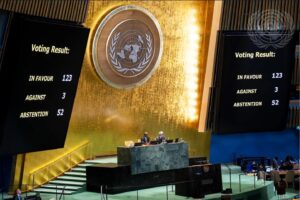
Copyright @nbcnews-The U.N. General Assembly Hall on Wednesday after the vote on a resolution declaring the trafficking of enslaved Africans “the gravest crime against humanity.”Manuel Elías / U.N. Photo
The vote, however, revealed divisions among member states. The United States, Argentina, and Israel voted against the resolution, which explicitly described slavery and the transatlantic slave trade as a “crime against humanity” and called for reparations. All 27 members of the European Union abstained, citing concerns over the language describing slavery as “the gravest crime against humanity.”
Gabriella Michaelidou, the Cypriot deputy UN ambassador whose government currently holds the EU’s six-month presidency, warned that such phrasing could imply “a hierarchy among atrocity crimes,” potentially creating diplomatic sensitivities regarding other human rights violations.
Ghanaian officials framed the adoption as a significant milestone in advancing justice, recognition, and healing for the millions affected by slavery. Discussions following the vote included John Dramani Mahama, emphasising the need for continued dialogue and public awareness around the transatlantic slave trade’s enduring legacy.

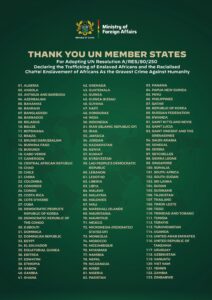
Countries-Adopted-the-Rseolution
The resolution further positions Ghana as a leading voice in global governance, highlighting its democratic credentials and influence in shaping international priorities such as sustainable development and global health.
While the resolution’s adoption is expected to strengthen international observance of the remembrance day and promote educational initiatives, the abstentions and opposing votes underscore ongoing debates over historical accountability, reparations, and the framing of atrocities within the UN system.