Africa
What was Étienne Davignon’s Role in Patrice Lumumba’s Death?
Former top diplomat and European Commissioner Etienne Davignon, 93, has been ordered by the Brussels appeal court to appear in court over his alleged involvement in the assassination of Patrice Lumumba, the first Prime Minister of independent Congo, who was killed in 1961. Davignon still has the right to appeal the decision.
Davignon is the only surviving individual among the Belgians accused by Lumumba’s family of complicity in the murder. In 2002, a Belgian parliamentary investigation concluded that Belgium bore “moral responsibility” for Lumumba’s death.

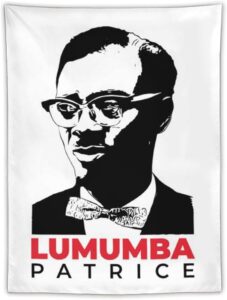
The judicial process has been slow. Lumumba’s family officially filed their war crimes lawsuit in 2011, but it took more than ten years for the courts to complete the investigation. The family believes the government deliberately delayed the process to allow suspects to die before facing justice. Of the eleven Belgians originally accused in 2011, Étienne Davignon is the only one still alive to appear before a judge.
The case itself had long been shrouded in secrecy. Following Lumumba’s assassination, his body was dismembered and dissolved in acid to destroy evidence. For decades, Belgium appeared to consider the case closed, and those involved lived quiet, wealthy lives. It was only after the publication of Ludo de Witte’s investigative book that renewed attention led to a government inquiry in 2000.
At the time of Lumumba’s capture, Davignon was just 28 and serving as a junior diplomat in Belgium’s Congo unit under Foreign Minister Pierre Wigny. Prosecutors allege that he participated in unlawful detention and transfer, deprived Lumumba of the right to a fair trial, and subjected him to humiliating and degrading treatment. He is also implicated in the deaths of two of Lumumba’s political allies, Maurice Mpolo and Joseph Okito, who were executed alongside him.
Davignon later led a highly influential life. He became the first head of the International Energy Agency, served as Vice-President of the European Commission, chaired a major Belgian holding company, and maintained close ties with the Belgian royal family. His wealth and social status helped him avoid scrutiny for much of his life.
He was not present in court on Tuesday, and his lawyer declined to comment. This trial marks a significant moment in Belgium’s reckoning with its colonial history and the role of its officials in one of Africa’s most consequential political assassinations.