
Interviews
Luton All- Star Jaguars under 10’s


Africa
DR Congo Set to Receive US-Deported Third-Country Nationals
The government of Democratic Republic of the Congo has confirmed it will begin receiving third-country nationals deported from the United States under a newly announced agreement with the administration of Donald Trump, in a move that is already raising legal and ethical questions.
In a statement issued in Kinshasa on Sunday, authorities said the transfers would commence in April, though officials declined to specify how many individuals would be accepted under the arrangement. The policy places Congo among a growing number of African states enlisted by Washington to host deportees who are not nationals of the receiving country.
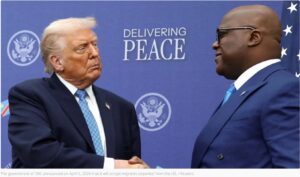
Dec. 20025- D.Trump and F. Tshisekedi Signing a Treaty of Peace @Reuters
According to the Congolese government, the programme will be fully financed by the United States, with no direct cost to the national budget. Infrastructure has reportedly been prepared on the outskirts of Kinshasa to accommodate arrivals, suggesting a degree of logistical planning already underway.
The deal mirrors similar arrangements previously concluded with countries including Ghana, Cameroon, Equatorial Guinea and Eswatini. These agreements have drawn sustained criticism from legal scholars and human rights organisations, who argue that transferring deportees to third countries raises serious concerns over due process, accountability and the protection of fundamental rights.
The timing of the agreement is notable. It coincides with renewed diplomatic efforts by Washington to stabilise relations between Democratic Republic of the Congo and Rwanda, amid persistent tensions in the eastern regions. At the same time, negotiations have intensified over access to Congo’s vast reserves of critical minerals—resources that are central to global supply chains in energy transition technologies.
Taken together, the arrangement underscores a broader recalibration of US policy in central Africa, where migration control, regional security and strategic resource interests are increasingly intertwined. Critics, however, warn that such deals risk externalising immigration enforcement while placing additional strain on countries already grappling with complex domestic challenges.
Africa
Can Winnie Odinga Win ODM’s Hearts?
Winnie Odinga’s political positioning reflects a deliberate attempt to reconcile two competing forces within the Orange Democratic Movement (ODM): the entrenched authority of legacy leadership embodied by Raila Odinga, and mounting pressure from a politically assertive, increasingly disillusioned youth constituency.
Her role in the East African Legislative Assembly provides regional stature, but her domestic challenge is institutional. She is not merely amplifying youth rhetoric; she is attempting to re-engineer ODM’s functional identity—from a historically anchored opposition vehicle into a platform capable of absorbing generational demands, particularly those of Gen Z voters focused on unemployment, governance deficits, and political inclusion.
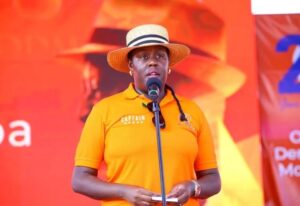
Winnie Odinga- Picture @ODM’s rally.
This intervention comes at a structurally sensitive moment. The Odinga family’s consolidation of control at the March 26 Special Delegates Convention signals organisational continuity, yet also reveals internal fragilities. ODM’s cohesion is increasingly contingent, with latent factionalism posing a credible threat to its electoral durability. Within this framework, Winnie Odinga’s outreach operates as both renewal strategy and pre-emptive stabilisation.
The ambiguity of ODM’s relationship with President William Ruto further complicates this recalibration. For younger constituencies, perceived proximity to executive power dilutes ODM’s oppositional credibility and creates ideological inconsistency. A party positioning itself as a counterweight to government while engaging in tacit alignment risks strategic incoherence. Winnie Odinga’s framing implicitly recognises this contradiction, though it remains politically sensitive to address directly.
Her intervention at the Linda Ground Special Delegates Convention sharpened this positioning. By elevating grassroots grievances—particularly from unemployed graduates—she reframed youth disengagement as a systemic failure of party architecture rather than generational apathy. Her critique of performative participation—limited to rallies and mobilisation—targets a structural feature of Kenyan party politics: the extraction of youth energy without corresponding inclusion in decision-making.
Her call for a “new ODM” was explicit in its direction. She urged the party to revert to its foundational ethos as a platform for the marginalised, while embedding youth participation within policy formulation and internal negotiations. This framing moves beyond symbolic inclusion toward institutional redesign—an agenda that, if implemented, would materially alter intra-party power distribution.
However, alignment with youth sentiment does not automatically convert into durable political capital. Three structural constraints remain.
First, dynastic optics. Operating within the Odinga political lineage confers visibility but also reinforces perceptions of elite continuity. Among Gen Z voters sceptical of inherited power, this creates a credibility threshold that reformist messaging alone may not overcome.
Second, institutional inertia within ODM. Senior figures, including Oburu Oginga, have signalled openness, particularly following his elevation within party leadership. Yet absent formal mechanisms—such as youth representation quotas or participatory policy frameworks—these assurances risk remaining declarative rather than operational.
Third, unresolved strategic positioning vis-à-vis the Ruto administration. Without a clearly defined stance, ODM’s internal messaging—especially to politically conscious youth—remains fragmented. A constituency oriented toward accountability is unlikely to respond to ambiguity on whether the party is oppositional or accommodative.
Analytically, Winnie Odinga’s political project is viable but conditional. Its success hinges on her capacity to translate discursive advocacy into institutional reform, while constructing a leadership identity that is distinct from, rather than derivative of, the broader Odinga legacy.
Her intervention has nonetheless catalysed a substantive debate about ODM’s future trajectory and the role of youth within Kenya’s political system. The outcome of this internal contest—between continuity and adaptation—will determine whether ODM can remain electorally relevant in an environment increasingly shaped by generational politics.
Africa
Burundi- Latest- President Évariste Ndayishimiye Expresses Gratitude for Outpouring of Support
A series of powerful explosions, followed by sustained secondary detonations, struck the “Base” camp munitions depot in Musaga, south of the capital Bujumbura, on Tuesday evening.
According to Brigadier General Gaspard Baratuza, spokesperson for the Force de Défense Nationale du Burundi, the incident was caused by an electrical fault within the facility.
The initial explosion occurred at approximately 6:00 p.m., with intermittent detonations continuing for more than an hour. By 7:39 p.m., further blasts were still being reported, suggesting ongoing explosions of stored munitions.
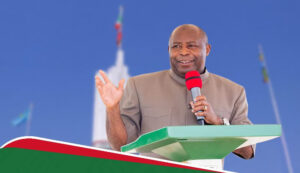
President Ndayimishiye of Burundi. Picture @PresidentNdayimishiye X’s Account
Preliminary accounts indicate that several nearby homes were destroyed and at least one fatality has been confirmed. No comprehensive official toll of casualties or material damage has yet been released.
In a statement issued shortly after the incident, President Évariste Ndayishimiye, who was in the country at the time, expressed appreciation for the messages of support received:
“On behalf of the Burundian people, I wish to express my gratitude to all those who, near or far, have shown us their solidarity following the fire that occurred at one of the logistical warehouses of the Musaga military base. I also wish to reassure you that the situation is under control.”


If Ebola Is Too Dangerous for America, It Is Too Dangerous for Kenya

AfCFTA Aims to Unite Africa’s Fragmented Markets Into a Single Trading Bloc
![President Denis Sassou Nguesso casts his vote at a polling station in Brazzaville during the Republic of Congo’s presidential election, 15 March 2026. [Congo Presidency/Handout via Reuters]](https://aukmedia.co.uk/wp-content/uploads/2026/04/DS-80x80.png)
Republic of Congo’s Denis Sassou Nguesso, 83, Secures Fifth Term in Power

Zia Yusuf from Reform UK Proposes Blocking Visas for Citizens of Countries Pursuing Slavery Reparations

ECOWAS at 50: President Obasanjo Warns of Declining Trust and Growing Divisions at Oxford Forum


