Connect with us

Africa

Republic of Congo’s Denis Sassou Nguesso, 83, Secures Fifth Term in Power

The Republic of Congo’s president, Denis Sassou Nguesso, was sworn in this week after securing a fifth consecutive term, extending a rule that now spans nearly 42 years. Provisional results announced on Tuesday by the officials put his share of the vote at 94.82% on Sunday’s poll — a margin that, while striking, had been widely anticipated.

The official turnout figure, 84.65%, raised immediate questions. State television reported high participation, yet scenes from polling stations in the capital, Brazzaville, suggested a more subdued reality, with many centres registering thin crowds or none at all. The discrepancy has reinforced longstanding doubts about the transparency of the electoral process.


President Denis Sassou Nguesso casts his vote at a polling station in Brazzaville during the Republic of Congo’s presidential election, 15 March 2026. [Congo Presidency/Handout via Reuters]

President Denis Sassou Nguesso casts his vote at a polling station in Brazzaville during the Republic of Congo’s presidential election, 15 March 2026. [Congo Presidency/Handout via Reuters]

At 82, Sassou Nguesso entered the race as the dominant political force, facing six relatively unknown challengers. Analysts and diplomats had predicted an easy victory, citing both the imbalance of resources and the broader political environment. During the campaign, the president alone conducted a nationwide tour, projecting visibility and control, while his rivals struggled to gain traction.

The election unfolded against the backdrop of an opposition boycott. Two key parties withdrew, alleging unfair conditions, while prominent figures such as General Jean-Marie Michel Mokoko and André Okombi Salissa — both imprisoned for nearly a decade — were absent from the contest. Their exclusion further narrowed an already limited field.

Restrictions in the run-up to the vote added to concerns. Internet access was cut, as has become routine during presidential elections, and movement across Brazzaville was constrained. Human rights groups reported arrests of activists, the suspension of opposition parties and tight monitoring of public gatherings, contributing to what critics describe as a climate of repression.

These dynamics reflect deeper structural patterns. Since returning to power after the 1997 civil war, Sassou Nguesso has consolidated control over state institutions. A 2015 constitutional referendum removed age and term limits, enabling him to extend his tenure and further entrench incumbency.

Yet the political continuity contrasts sharply with the country’s economic fragility. Despite significant oil and mineral wealth, the Republic of Congo remains heavily indebted. According to the World Bank, public debt stands at around 94.5% of gross domestic product, underscoring the persistent gap between resource revenues and broader development outcomes.

The scale of Sassou Nguesso’s victory, combined with the conditions under which it was secured, is likely to deepen scrutiny of both the electoral framework and the prospects for political pluralism. As the new term begins, questions around governance, economic management and eventual succession remain unresolved, even as the contours of power appear largely unchanged.
Africa

If Ebola Is Too Dangerous for America, It Is Too Dangerous for Kenya

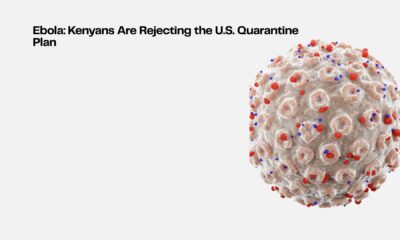
A growing number of Kenyans are questioning why their country should bear the risks of hosting a quarantine facility for U.S. citizens exposed to Ebola when Kenya itself has no confirmed cases of the deadly virus.

The proposed facility at Laikipia Air Base in Nanyuki has become the centre of a national debate about public health, sovereignty, and whether Kenya’s leaders are placing the interests of foreign governments ahead of the safety of their own citizens.

For residents living near the proposed site, the issue is straightforward. They believe that individuals exposed to Ebola should be quarantined and treated in their own countries.

Everybody should be quarantined in their home country. We shouldn’t allow foreigners to bring us diseases,” said Charles Mathenge, a taxi driver who lives near the air base, interviewed by The Guardian Newspaper.

Kenya is our country, and we should be careful with it.”

His concerns reflect a wider sentiment spreading across the country. Many Kenyans argue that while international cooperation is important, it should never come at the expense of national safety. Kenya remains free of any known Ebola cases, yet the proposal would involve admitting individuals who may have been exposed to one of the world’s most dangerous infectious diseases.

The concerns are heightened by the nature of the current outbreak. Health authorities in Uganda and the Democratic Republic of the Congo are battling a resurgence of Ebola caused by the rare Bundibugyo strain, for which there is currently no approved vaccine or treatment. The World Health Organization has declared the outbreak a Public Health Emergency of International Concern. The virus is believed to have circulated undetected for weeks before the outbreak was officially declared.

As cases and deaths continue to rise in neighbour countries, many Kenyans are asking why their nation should voluntarily introduce an additional risk into a country that has so far remained unaffected.

At the heart of the controversy is what many view as a glaring double standard. U.S. Secretary of State Marco Rubio recently stated that the United States “cannot and will not allow any cases of Ebola to enter the United States.” Yet Washington is reportedly seeking to establish a quarantine facility in Kenya for American citizens potentially exposed to the virus.

For critics, this raises an uncomfortable question: if the United States considers the risk too great for its own population, why should Kenya be expected to accept it?

The contradiction becomes even more striking when considering that during previous Ebola outbreaks, American citizens were often repatriated to the United States for treatment. More recently, an American doctor who contracted Ebola in the Democratic Republic of the Congo was transferred to Germany for care alongside his family.

This has fuelled accusations that Kenya is being treated as a convenient buffer zone rather than an equal partner.

The backlash has extended beyond local residents. Medical professionals have been among the most vocal opponents of the plan. Interviewed by The Guardian Newspaper, Dr. Davji Atellah of the Kenya Medical Practitioners, Pharmacists and Dentists Union warned that Kenya should not be turned into what he described as a “containment colony.”

His statement captured a broader concern that developing countries are too often expected to absorb risks that wealthier nations are unwilling to shoulder themselves.

If it is too dangerous for America, it is too dangerous for Kenya,” he argued.

The controversy has also exposed deeper questions about governance and national sovereignty. Following a petition by the Katiba Institute, the High Court in Nairobi temporarily blocked the establishment of the facility and the admission of Ebola-exposed individuals into Kenya. The petitioners argued that any agreement between the Kenyan and U.S. governments must be subjected to public scrutiny and constitutional safeguards, particularly when public health and national security are involved.

The court’s intervention reflects growing concerns that decisions with potentially far-reaching consequences for millions of Kenyans cannot be made behind closed doors.

Beyond the immediate health concerns lies a larger principle. Every government has a primary responsibility to protect its citizens. International partnerships should strengthen national security, not weaken it. For many Kenyans, the Ebola quarantine proposal is not simply about a medical facility—it is about whether Kenya’s sovereignty, public safety, and national interests are being adequately defended.

The message from residents of Nanyuki and many others across the country is clear: Kenya cannot afford to gamble with the health of its people. As one resident put it, “We don’t have another country to run to.”

In a world where powerful nations increasingly prioritize their own security and public health, many Kenyans believe their government must do the same. Protecting citizens from preventable risks is not isolationism; it is a fundamental duty of the state. The debate over the proposed Ebola facility has therefore become a test of whether Kenya will place the wellbeing of its people first, or allow external interests to dictate decisions that could have lasting consequences for the nation.

Continue Reading

Africa

AfCFTA Aims to Unite Africa’s Fragmented Markets Into a Single Trading Bloc

The African Continental Free Trade Area, known as the AfCFTA, brings together all 55 member states of the African Union into a single trading bloc, an effort to knit together one of the world’s most fragmented markets. By lowering barriers across eight regional economic communities, the agreement is intended to allow goods and services to move more freely across borders, strengthening Africa’s position in global trade.

Economists say the pact could significantly reshape commerce within the continent. Estimates suggest that eliminating import duties alone could increase intra-African trade by more than 50 percent, with even larger gains possible if governments also address non-tariff barriers such as customs delays and regulatory hurdles.

For many businesses, the current system remains paradoxical: exporting within Africa is often more expensive than trading with partners outside the continent, with average tariffs hovering around 6.1 percent. The agreement aims to reverse that dynamic by gradually reducing these costs, opening access to a larger and more integrated market.

Over the longer term, proponents argue, the AfCFTA could help drive structural transformation. Some projections suggest that, if fully implemented, it could expand Africa’s combined economic output to as much as $29 trillion by mid-century, though much will depend on how effectively member states follow through on reforms.

Continue Reading

Africa

Burkina Faso Dissolves NGOs in Push for State Sovereignty, Said Ibrahim Traore Amid Rising tensions with civil society

Burkina Faso’s military authorities have ordered the dissolution of more than 100 civil society organisations, in a sweeping move that rights groups say marks a deepening assault on fundamental freedoms.

The decree, announced on Wednesday by the Ministry of Territorial Administration, mandates the closure of 118 associations and non-governmental organisations and prohibits their activities, citing compliance with existing legal provisions. Many of the affected groups are engaged in human rights advocacy.

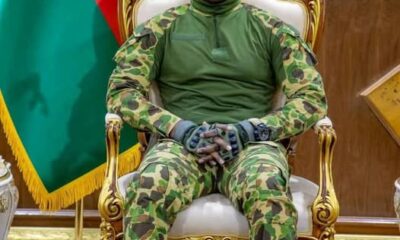
The decision represents the latest step in a broader tightening of political space under the junta led by Ibrahim Traoré, which seized power in a 2022 coup and has since moved to curb opposition, trade unions and public assembly.

In recent months, the government has escalated its campaign against organised civil society. A law introduced last year imposed new restrictions on the operations of rights groups, followed by suspensions and revocations of permits for dozens of organisations on administrative grounds. Earlier this year, political parties were formally dissolved after a prolonged suspension.

Officials have framed the measures as necessary to enforce regulatory compliance, with territorial administration minister Emile Zerbo warning that any breach of the new rules would be met with legal sanctions.

Human rights organisations have sharply criticised the move. Amnesty International described the dissolutions as a “flagrant attack” on freedom of association and warned of an intensifying crackdown on civic space in the Sahel state.

Analysts see the latest decree as part of a broader strategy to consolidate authority and limit dissent, as the government continues to confront a protracted insurgency linked to groups affiliated with al-Qaeda and Islamic State. Authorities have repeatedly accused some internationally funded organisations of acting as conduits for foreign interference, a claim civil society actors strongly deny.

The dissolutions underscore the increasingly fraught relationship between the state and civil society in Burkina Faso, where the boundaries of political participation continue to narrow under military rule.

Continue Reading