
Africa
Can Winnie Odinga Win ODM’s Hearts?
Winnie Odinga’s political positioning reflects a deliberate attempt to reconcile two competing forces within the Orange Democratic Movement (ODM): the entrenched authority of legacy leadership embodied by Raila Odinga, and mounting pressure from a politically assertive, increasingly disillusioned youth constituency.
Her role in the East African Legislative Assembly provides regional stature, but her domestic challenge is institutional. She is not merely amplifying youth rhetoric; she is attempting to re-engineer ODM’s functional identity—from a historically anchored opposition vehicle into a platform capable of absorbing generational demands, particularly those of Gen Z voters focused on unemployment, governance deficits, and political inclusion.
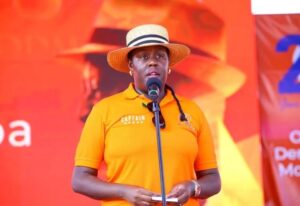
Winnie Odinga- Picture @ODM’s rally.
This intervention comes at a structurally sensitive moment. The Odinga family’s consolidation of control at the March 26 Special Delegates Convention signals organisational continuity, yet also reveals internal fragilities. ODM’s cohesion is increasingly contingent, with latent factionalism posing a credible threat to its electoral durability. Within this framework, Winnie Odinga’s outreach operates as both renewal strategy and pre-emptive stabilisation.
The ambiguity of ODM’s relationship with President William Ruto further complicates this recalibration. For younger constituencies, perceived proximity to executive power dilutes ODM’s oppositional credibility and creates ideological inconsistency. A party positioning itself as a counterweight to government while engaging in tacit alignment risks strategic incoherence. Winnie Odinga’s framing implicitly recognises this contradiction, though it remains politically sensitive to address directly.
Her intervention at the Linda Ground Special Delegates Convention sharpened this positioning. By elevating grassroots grievances—particularly from unemployed graduates—she reframed youth disengagement as a systemic failure of party architecture rather than generational apathy. Her critique of performative participation—limited to rallies and mobilisation—targets a structural feature of Kenyan party politics: the extraction of youth energy without corresponding inclusion in decision-making.
Her call for a “new ODM” was explicit in its direction. She urged the party to revert to its foundational ethos as a platform for the marginalised, while embedding youth participation within policy formulation and internal negotiations. This framing moves beyond symbolic inclusion toward institutional redesign—an agenda that, if implemented, would materially alter intra-party power distribution.
However, alignment with youth sentiment does not automatically convert into durable political capital. Three structural constraints remain.
First, dynastic optics. Operating within the Odinga political lineage confers visibility but also reinforces perceptions of elite continuity. Among Gen Z voters sceptical of inherited power, this creates a credibility threshold that reformist messaging alone may not overcome.
Second, institutional inertia within ODM. Senior figures, including Oburu Oginga, have signalled openness, particularly following his elevation within party leadership. Yet absent formal mechanisms—such as youth representation quotas or participatory policy frameworks—these assurances risk remaining declarative rather than operational.
Third, unresolved strategic positioning vis-à-vis the Ruto administration. Without a clearly defined stance, ODM’s internal messaging—especially to politically conscious youth—remains fragmented. A constituency oriented toward accountability is unlikely to respond to ambiguity on whether the party is oppositional or accommodative.
Analytically, Winnie Odinga’s political project is viable but conditional. Its success hinges on her capacity to translate discursive advocacy into institutional reform, while constructing a leadership identity that is distinct from, rather than derivative of, the broader Odinga legacy.
Her intervention has nonetheless catalysed a substantive debate about ODM’s future trajectory and the role of youth within Kenya’s political system. The outcome of this internal contest—between continuity and adaptation—will determine whether ODM can remain electorally relevant in an environment increasingly shaped by generational politics.






Africa
If Ebola Is Too Dangerous for America, It Is Too Dangerous for Kenya
Africa
AfCFTA Aims to Unite Africa’s Fragmented Markets Into a Single Trading Bloc
Africa
Republic of Congo’s Denis Sassou Nguesso, 83, Secures Fifth Term in Power
The Republic of Congo’s president, Denis Sassou Nguesso, was sworn in this week after securing a fifth consecutive term, extending a rule that now spans nearly 42 years. Provisional results announced on Tuesday by the officials put his share of the vote at 94.82% on Sunday’s poll — a margin that, while striking, had been widely anticipated.
The official turnout figure, 84.65%, raised immediate questions. State television reported high participation, yet scenes from polling stations in the capital, Brazzaville, suggested a more subdued reality, with many centres registering thin crowds or none at all. The discrepancy has reinforced longstanding doubts about the transparency of the electoral process.
![President Denis Sassou Nguesso casts his vote at a polling station in Brazzaville during the Republic of Congo’s presidential election, 15 March 2026. [Congo Presidency/Handout via Reuters]](https://aukmedia.co.uk/wp-content/uploads/2026/04/DS-300x169.png)
President Denis Sassou Nguesso casts his vote at a polling station in Brazzaville during the Republic of Congo’s presidential election, 15 March 2026. [Congo Presidency/Handout via Reuters]
The election unfolded against the backdrop of an opposition boycott. Two key parties withdrew, alleging unfair conditions, while prominent figures such as General Jean-Marie Michel Mokoko and André Okombi Salissa — both imprisoned for nearly a decade — were absent from the contest. Their exclusion further narrowed an already limited field.
Restrictions in the run-up to the vote added to concerns. Internet access was cut, as has become routine during presidential elections, and movement across Brazzaville was constrained. Human rights groups reported arrests of activists, the suspension of opposition parties and tight monitoring of public gatherings, contributing to what critics describe as a climate of repression.
These dynamics reflect deeper structural patterns. Since returning to power after the 1997 civil war, Sassou Nguesso has consolidated control over state institutions. A 2015 constitutional referendum removed age and term limits, enabling him to extend his tenure and further entrench incumbency.
Yet the political continuity contrasts sharply with the country’s economic fragility. Despite significant oil and mineral wealth, the Republic of Congo remains heavily indebted. According to the World Bank, public debt stands at around 94.5% of gross domestic product, underscoring the persistent gap between resource revenues and broader development outcomes.
The scale of Sassou Nguesso’s victory, combined with the conditions under which it was secured, is likely to deepen scrutiny of both the electoral framework and the prospects for political pluralism. As the new term begins, questions around governance, economic management and eventual succession remain unresolved, even as the contours of power appear largely unchanged.


If Ebola Is Too Dangerous for America, It Is Too Dangerous for Kenya

AfCFTA Aims to Unite Africa’s Fragmented Markets Into a Single Trading Bloc
![President Denis Sassou Nguesso casts his vote at a polling station in Brazzaville during the Republic of Congo’s presidential election, 15 March 2026. [Congo Presidency/Handout via Reuters]](https://aukmedia.co.uk/wp-content/uploads/2026/04/DS-80x80.png)
Republic of Congo’s Denis Sassou Nguesso, 83, Secures Fifth Term in Power

Zia Yusuf from Reform UK Proposes Blocking Visas for Citizens of Countries Pursuing Slavery Reparations

ECOWAS at 50: President Obasanjo Warns of Declining Trust and Growing Divisions at Oxford Forum


