
Africa
Ghana to Introduce Visa-Free Entry for All Africans in Pan-African Push
Ghana is to grant visa-free access to all African nationals, in a move the government says will deepen regional integration and reaffirm the country’s historic role at the centre of Pan-Africanism.
President John Mahama announced the policy during a state visit by Emmerson Mnangagwa, declaring that the measure will take effect on 25 May, the annual commemoration of Africa Day.
The decision positions Ghana among a small but growing group of African states seeking to dismantle long-standing barriers to movement across the continent. Officials in Accra argue that restrictive visa regimes have historically constrained trade, tourism and labour mobility within Africa, despite decades of political commitments to integration.
Under the new framework, travellers will be able to enter Ghana without prior visa approval, with the scheme forming part of a broader digital migration system centred on a forthcoming e-visa platform. Authorities say the reform is intended to streamline border processes while maintaining security oversight.
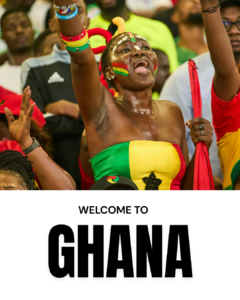
Visa Free To All Africans
The policy also carries economic intent. Ghanaian officials expect the move to stimulate intra-African commerce and increase visitor flows at a time when many African economies are seeking to diversify growth beyond commodity exports. Tourism, in particular, is likely to be an early beneficiary, as airlines and hospitality operators respond to reduced administrative friction for travellers.
Mahama used the announcement to signal a wider diplomatic effort. He said the government would intensify negotiations on reciprocal visa waiver agreements for Ghanaian citizens, noting that more than 20 such arrangements have been secured over the past year. The objective, he indicated, is to ensure that mobility gains are not one-sided but embedded within a broader framework of continental reciprocity.
The initiative aligns with ambitions underpinning the African Continental Free Trade Area (AfCFTA), which seeks not only to liberalise trade but also to ease the movement of people and services. Analysts caution, however, that implementation will be decisive. Past attempts across the continent have often faltered at the level of border enforcement, infrastructure capacity and inter-agency coordination.
Even so, the symbolism is difficult to ignore. By tying the policy’s launch to Africa Day, Ghana is drawing a direct line between contemporary economic strategy and the ideological legacy of Pan-African unity — a legacy the country has long claimed as part of its political identity.
If effectively executed, the visa-free regime could mark a substantive shift in how African states approach mobility: not as a security risk to be contained, but as an economic asset to be unlocked.
![President Denis Sassou Nguesso casts his vote at a polling station in Brazzaville during the Republic of Congo’s presidential election, 15 March 2026. [Congo Presidency/Handout via Reuters]](https://aukmedia.co.uk/wp-content/uploads/2026/04/DS-400x240.png)



Africa
If Ebola Is Too Dangerous for America, It Is Too Dangerous for Kenya
Africa
AfCFTA Aims to Unite Africa’s Fragmented Markets Into a Single Trading Bloc
Africa
Republic of Congo’s Denis Sassou Nguesso, 83, Secures Fifth Term in Power
The Republic of Congo’s president, Denis Sassou Nguesso, was sworn in this week after securing a fifth consecutive term, extending a rule that now spans nearly 42 years. Provisional results announced on Tuesday by the officials put his share of the vote at 94.82% on Sunday’s poll — a margin that, while striking, had been widely anticipated.
The official turnout figure, 84.65%, raised immediate questions. State television reported high participation, yet scenes from polling stations in the capital, Brazzaville, suggested a more subdued reality, with many centres registering thin crowds or none at all. The discrepancy has reinforced longstanding doubts about the transparency of the electoral process.
![President Denis Sassou Nguesso casts his vote at a polling station in Brazzaville during the Republic of Congo’s presidential election, 15 March 2026. [Congo Presidency/Handout via Reuters]](https://aukmedia.co.uk/wp-content/uploads/2026/04/DS-300x169.png)
President Denis Sassou Nguesso casts his vote at a polling station in Brazzaville during the Republic of Congo’s presidential election, 15 March 2026. [Congo Presidency/Handout via Reuters]
The election unfolded against the backdrop of an opposition boycott. Two key parties withdrew, alleging unfair conditions, while prominent figures such as General Jean-Marie Michel Mokoko and André Okombi Salissa — both imprisoned for nearly a decade — were absent from the contest. Their exclusion further narrowed an already limited field.
Restrictions in the run-up to the vote added to concerns. Internet access was cut, as has become routine during presidential elections, and movement across Brazzaville was constrained. Human rights groups reported arrests of activists, the suspension of opposition parties and tight monitoring of public gatherings, contributing to what critics describe as a climate of repression.
These dynamics reflect deeper structural patterns. Since returning to power after the 1997 civil war, Sassou Nguesso has consolidated control over state institutions. A 2015 constitutional referendum removed age and term limits, enabling him to extend his tenure and further entrench incumbency.
Yet the political continuity contrasts sharply with the country’s economic fragility. Despite significant oil and mineral wealth, the Republic of Congo remains heavily indebted. According to the World Bank, public debt stands at around 94.5% of gross domestic product, underscoring the persistent gap between resource revenues and broader development outcomes.
The scale of Sassou Nguesso’s victory, combined with the conditions under which it was secured, is likely to deepen scrutiny of both the electoral framework and the prospects for political pluralism. As the new term begins, questions around governance, economic management and eventual succession remain unresolved, even as the contours of power appear largely unchanged.


If Ebola Is Too Dangerous for America, It Is Too Dangerous for Kenya

AfCFTA Aims to Unite Africa’s Fragmented Markets Into a Single Trading Bloc
![President Denis Sassou Nguesso casts his vote at a polling station in Brazzaville during the Republic of Congo’s presidential election, 15 March 2026. [Congo Presidency/Handout via Reuters]](https://aukmedia.co.uk/wp-content/uploads/2026/04/DS-80x80.png)
Republic of Congo’s Denis Sassou Nguesso, 83, Secures Fifth Term in Power

Zia Yusuf from Reform UK Proposes Blocking Visas for Citizens of Countries Pursuing Slavery Reparations

ECOWAS at 50: President Obasanjo Warns of Declining Trust and Growing Divisions at Oxford Forum


