
United Kingdom
Why Are More Black Britons Applying to Oxford University?
Why Are More Black Britons Applying to Oxford University?
According to the facts and figures report published by Oxford University, “the number of UK-domiciled students with Black African or Black Caribbean heritage applying, receiving offers, and being admitted has increased from 2019 to 2023.”
The proportion of UK-domiciled students identifying as Black on their UCAS applications rose from 3.2% in 2019 to 3.6% in 2023.
Oxford University recognised that, historically, Black British students have been underrepresented, with only 1.1% of Black or Mixed Black ethnicity students studying at the university a decade ago. However, in recent years, several factors—including institutional changes and broader societal shifts—have contributed to a rise in applications from Black students.
To address racial disparities in admissions and retention, Oxford University has made a visible commitment to improving diversity and inclusion. Outreach programs specifically targeting underrepresented groups, including Black students, have been introduced in collaboration with schools, community organisations, and prominent Black role models. This has made Oxford feel more welcoming and accessible to Black Britons.

The increased media attention on the success stories of Black students at Oxford over the past decade has also played a significant role in shifting the conversation around access to elite institutions like Oxford. These success stories have inspired more Black Britons to view Oxford as an attainable goal.
In 2019, Oxford University launched UNIQ Summer Schools, which provide students from underrepresented backgrounds with the opportunity to experience university life and receive guidance on applying. New College Oxford has also partnered with academic organisations to create scholarships for economically disadvantaged Black British students.
One example is the Robert Allen Perkins Scholarship, which offers a fully funded place at Oxford to Black British students who qualify for an Oxford Bursary (with a household income below £42,875) and have been accepted to the university. The scholarship covers full course fees and provides a significant grant towards living costs, allowing recipients to graduate debt-free.
Another initiative, the Black Academic Futures Scholarships, provides financial support for UK Black and Mixed Black students pursuing graduate studies at Oxford. These scholarships are open to all academic subjects and are made possible through the generous support of funding partners across the university and its colleges. Also, most students from low-income families hoping to study at Oxford University have been invited to look for the Crankstart Scholarship.
Each scholarship covers full course fees and includes a grant for living expenses throughout the recipient’s studies.
According to the Oxford University website, the eligibility for these scholarships is open to UK residents who identify as Black or Mixed Black ethnicity and hold an offer for a postgraduate taught or research degree starting in the 2025-26 academic year. This includes all full-time and part-time DPhil and master’s programs. Applicants must have been ordinarily resident in the UK for three years before starting their course, excluding time spent in the UK primarily for full-time education. Most of these scholarships support students across the university and are available for all subject areas, with some funding dedicated to specific courses.
Why are more Black Britons applying to Oxford University? https://aukradio.co.uk/why-are-more-black-britons-applying-to-oxford-university/
Africa
Burkina Faso Dissolves NGOs in Push for State Sovereignty, Said Ibrahim Traore Amid Rising tensions with civil society
Africa
DR Congo Faces Political Backlash Over US Deportees Agreement Amid Security and Governance Concerns
Africa
Zia Yusuf from Reform UK Proposes Blocking Visas for Citizens of Countries Pursuing Slavery Reparations
Zia Yusuf, Reform UK’s home affairs spokesperson, has announced plans to deny visas to citizens of any country pursuing compensation for Britain’s historical role in the transatlantic slave trade, a move that has drawn international attention.
He described reparations claims as “insulting,” noting that 3.8 million visas have been issued over the past 20 years to nationals from countries making such demands.
The transatlantic slave trade, conducted over four centuries by seven European powers including the UK, forcibly transported more than 15 million Africans. Scholars link the wealth generated from slavery to the industrial rise of the West, a legacy that continues to shape global economic and social disparities.
Last month, the UN recognised the transatlantic slave trade as the “gravest crime against humanity” and called for reparations as a step toward remedying historical injustices. The resolution, proposed by Ghana’s President John Dramani Mahama and endorsed by the African Union and Caricom (Caribbean Community), was abstained by the UK and EU members, while the US, Israel and Argentina voted against it.
Yusuf argued that Britain had made “huge sacrifices” by being the first major power to abolish slavery and enforce its prohibition, insisting that the UK would no longer tolerate being “ridiculed on the world stage.” He added that countries pressing for reparations were attempting to “use history as a weapon to drain our treasury” and stressed that Reform UK would also cut international aid to nations making such claims.
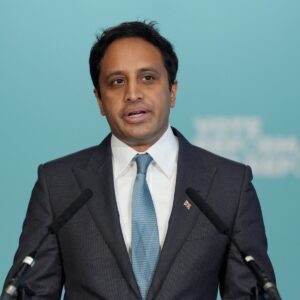
Yusuf Zia, UK Reform Home Affairs Spokesman, appears in Picture @Ghana Chronicles X’s account.


If Ebola Is Too Dangerous for America, It Is Too Dangerous for Kenya

AfCFTA Aims to Unite Africa’s Fragmented Markets Into a Single Trading Bloc
![President Denis Sassou Nguesso casts his vote at a polling station in Brazzaville during the Republic of Congo’s presidential election, 15 March 2026. [Congo Presidency/Handout via Reuters]](https://aukmedia.co.uk/wp-content/uploads/2026/04/DS-80x80.png)
Republic of Congo’s Denis Sassou Nguesso, 83, Secures Fifth Term in Power

Zia Yusuf from Reform UK Proposes Blocking Visas for Citizens of Countries Pursuing Slavery Reparations

ECOWAS at 50: President Obasanjo Warns of Declining Trust and Growing Divisions at Oxford Forum


