
United Kingdom
Could Anti-Immigration Tensions Impact the Appeal of UK Universities to International Students?
Could anti-immigration tensions impact the appeal of UK universities to international students?
Recent anti-immigration riots across England and Northern Ireland have intensified concerns among UK universities regarding their ability to attract international students, particularly from Africa and Asia.
Institutions like the University of Bedfordshire, ranked 8th in the East of England, boast a diverse student body with many hailing from Nigeria, India, Bangladesh, Uganda, and Zimbabwe. However, as the new academic year approaches, a growing sense of unease among returning international students is palpable.

Image Source: University of Greenwich
This unease is also exacerbated by the ongoing political debates surrounding immigration reduction. Early this year, former Conservative Home Secretary James Cleverly sparked controversy by suggesting that international students may be “undermining the integrity and quality of the UK higher education system” by using university courses as a cost-effective route to work visas.
In one of his communications to the Migration Advisory Committee (MAC), Cleverly questioned the effectiveness of the current work permit system, which allows international graduates to remain in the UK for two to three years. He argued that this policy is failing to attract “the brightest and the best” talent to the country.
University leaders, however, have pushed back against Cleverley’s assessment. They warn that cutting or restricting the graduate visa route could result in a significant decline in international student enrolment, potentially triggering a financial crisis for institutions that rely heavily on revenues generated through international tuition fees.
These Universities are financially vulnerable, some, having already experienced a decline in visa applications following immigration curbs introduced by the previous Conservative government. According to Home Office statistics, applications for skilled worker, health and care, and study visas dropped from 141,000 in July 2023 to 91,000 in July 2024.
Facing the prospect of financial shortfalls, the university may be forced to consider raising tuition fees for international students. Since taking over government in July, the Labour immigration policy also seems drastic with no major changes from the Conservative policy on immigration.
With the recent anti-immigration riots across cities in England, such a move could further discourage potential applicants from Africa and other regions, jeopardizing not only the university’s financial stability but also its reputation as a welcoming and diverse institution.







Africa
Burkina Faso Dissolves NGOs in Push for State Sovereignty, Said Ibrahim Traore Amid Rising tensions with civil society
Africa
DR Congo Faces Political Backlash Over US Deportees Agreement Amid Security and Governance Concerns
Africa
Zia Yusuf from Reform UK Proposes Blocking Visas for Citizens of Countries Pursuing Slavery Reparations
Zia Yusuf, Reform UK’s home affairs spokesperson, has announced plans to deny visas to citizens of any country pursuing compensation for Britain’s historical role in the transatlantic slave trade, a move that has drawn international attention.
He described reparations claims as “insulting,” noting that 3.8 million visas have been issued over the past 20 years to nationals from countries making such demands.
The transatlantic slave trade, conducted over four centuries by seven European powers including the UK, forcibly transported more than 15 million Africans. Scholars link the wealth generated from slavery to the industrial rise of the West, a legacy that continues to shape global economic and social disparities.
Last month, the UN recognised the transatlantic slave trade as the “gravest crime against humanity” and called for reparations as a step toward remedying historical injustices. The resolution, proposed by Ghana’s President John Dramani Mahama and endorsed by the African Union and Caricom (Caribbean Community), was abstained by the UK and EU members, while the US, Israel and Argentina voted against it.
Yusuf argued that Britain had made “huge sacrifices” by being the first major power to abolish slavery and enforce its prohibition, insisting that the UK would no longer tolerate being “ridiculed on the world stage.” He added that countries pressing for reparations were attempting to “use history as a weapon to drain our treasury” and stressed that Reform UK would also cut international aid to nations making such claims.
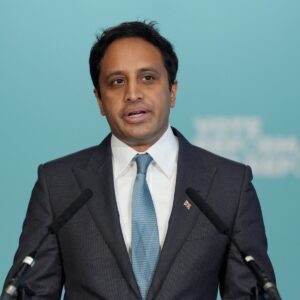
Yusuf Zia, UK Reform Home Affairs Spokesman, appears in Picture @Ghana Chronicles X’s account.


If Ebola Is Too Dangerous for America, It Is Too Dangerous for Kenya

AfCFTA Aims to Unite Africa’s Fragmented Markets Into a Single Trading Bloc
![President Denis Sassou Nguesso casts his vote at a polling station in Brazzaville during the Republic of Congo’s presidential election, 15 March 2026. [Congo Presidency/Handout via Reuters]](https://aukmedia.co.uk/wp-content/uploads/2026/04/DS-80x80.png)
Republic of Congo’s Denis Sassou Nguesso, 83, Secures Fifth Term in Power

Zia Yusuf from Reform UK Proposes Blocking Visas for Citizens of Countries Pursuing Slavery Reparations

ECOWAS at 50: President Obasanjo Warns of Declining Trust and Growing Divisions at Oxford Forum


