Connect with us

Featured

Celebrating Nigeria’s Independence: A Vibrant Cultural Exhibition in South East England.

South East of England, came alive with the spirit of unity and celebration as the Nigeria Bedfordshire Community commemorated 63 years of independence from its former British colonial rule. The event, which took place on September 30, 2023, at Futures House in Marsh Farm, saw a delightful blend of local authorities, businesses, exhibitors representing diverse communities, cultural showcases, enlightening talks, and invaluable networking opportunities.

The celebration, which extended through Independence Day on October 1st, highlighted the warm-hearted and inclusive community spirit of South East England, particularly in Luton.. On this special day, a “Food Bank Drive” unfolded at Luton St George’s Square, offering free, nutritionally balanced, and culturally appropriate food to the local communities, symbolising the essence of togetherness and giving back.

At Futures House, the event provided a platform for Luton’s residents to converge and rejoice in the rich tapestry of cultures that make up this remarkable town. Attendees had the chance to immerse themselves in the vibrant history and traditions of Nigeria, savouring the exquisite flavours of its traditional cuisine, and being enthralled by live music and mesmerising dance performances.
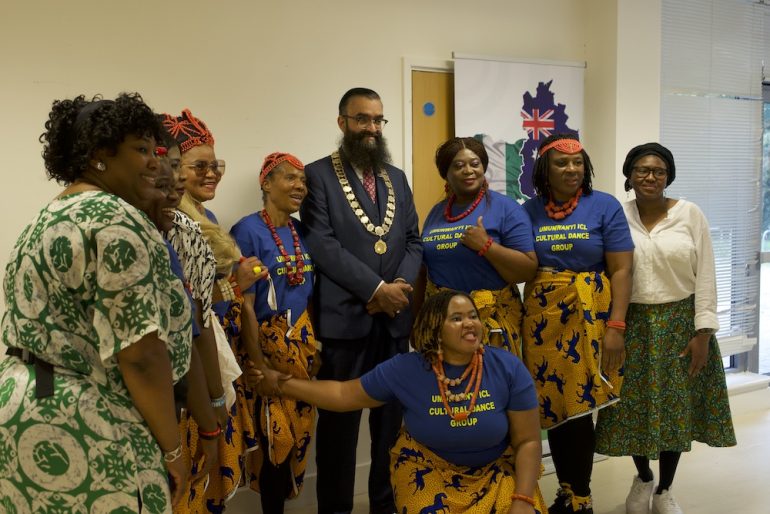
Babatunde Ajisola, a dedicated Luton Labour Councillor and Chair of Nigeria Bedfordshire Community, highlighted the significance of this gathering. He expressed, “This event is an opportunity for us to reiterate our commitment to being an integral part of the Luton community. As Nigerians residing in Bedfordshire, we take immense pride in embracing and upholding British values while celebrating our cultural heritage.”
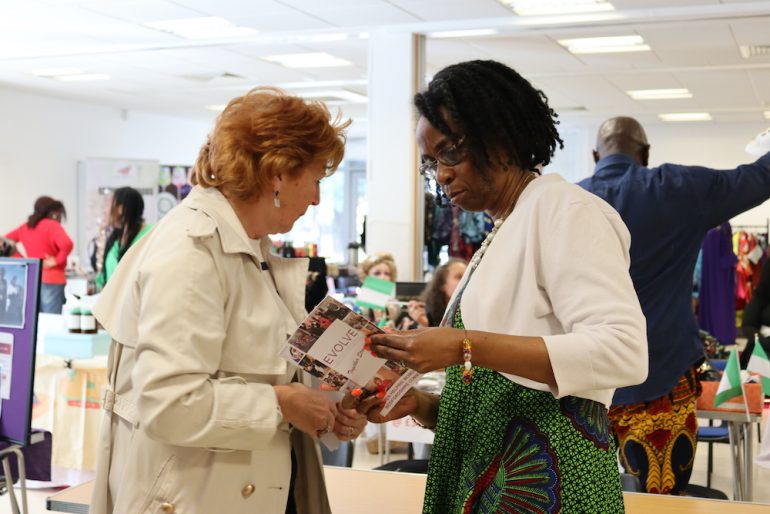
This celebration was not just a reflection of Nigeria’s rich history and culture but also a testament to the unifying power of community spirit in Luton. The event underscored the idea that, in Luton, cultural diversity is not merely embraced; it is celebrated with open arms, highlighting the strength of unity that prevails in this vibrant and inclusive community.
Africa

If Ebola Is Too Dangerous for America, It Is Too Dangerous for Kenya

A growing number of Kenyans are questioning why their country should bear the risks of hosting a quarantine facility for U.S. citizens exposed to Ebola when Kenya itself has no confirmed cases of the deadly virus.

The proposed facility at Laikipia Air Base in Nanyuki has become the centre of a national debate about public health, sovereignty, and whether Kenya’s leaders are placing the interests of foreign governments ahead of the safety of their own citizens.

For residents living near the proposed site, the issue is straightforward. They believe that individuals exposed to Ebola should be quarantined and treated in their own countries.

Everybody should be quarantined in their home country. We shouldn’t allow foreigners to bring us diseases,” said Charles Mathenge, a taxi driver who lives near the air base, interviewed by The Guardian Newspaper.

Kenya is our country, and we should be careful with it.”

His concerns reflect a wider sentiment spreading across the country. Many Kenyans argue that while international cooperation is important, it should never come at the expense of national safety. Kenya remains free of any known Ebola cases, yet the proposal would involve admitting individuals who may have been exposed to one of the world’s most dangerous infectious diseases.

The concerns are heightened by the nature of the current outbreak. Health authorities in Uganda and the Democratic Republic of the Congo are battling a resurgence of Ebola caused by the rare Bundibugyo strain, for which there is currently no approved vaccine or treatment. The World Health Organization has declared the outbreak a Public Health Emergency of International Concern. The virus is believed to have circulated undetected for weeks before the outbreak was officially declared.

As cases and deaths continue to rise in neighbour countries, many Kenyans are asking why their nation should voluntarily introduce an additional risk into a country that has so far remained unaffected.

At the heart of the controversy is what many view as a glaring double standard. U.S. Secretary of State Marco Rubio recently stated that the United States “cannot and will not allow any cases of Ebola to enter the United States.” Yet Washington is reportedly seeking to establish a quarantine facility in Kenya for American citizens potentially exposed to the virus.

For critics, this raises an uncomfortable question: if the United States considers the risk too great for its own population, why should Kenya be expected to accept it?

The contradiction becomes even more striking when considering that during previous Ebola outbreaks, American citizens were often repatriated to the United States for treatment. More recently, an American doctor who contracted Ebola in the Democratic Republic of the Congo was transferred to Germany for care alongside his family.

This has fuelled accusations that Kenya is being treated as a convenient buffer zone rather than an equal partner.

The backlash has extended beyond local residents. Medical professionals have been among the most vocal opponents of the plan. Interviewed by The Guardian Newspaper, Dr. Davji Atellah of the Kenya Medical Practitioners, Pharmacists and Dentists Union warned that Kenya should not be turned into what he described as a “containment colony.”

His statement captured a broader concern that developing countries are too often expected to absorb risks that wealthier nations are unwilling to shoulder themselves.

If it is too dangerous for America, it is too dangerous for Kenya,” he argued.

The controversy has also exposed deeper questions about governance and national sovereignty. Following a petition by the Katiba Institute, the High Court in Nairobi temporarily blocked the establishment of the facility and the admission of Ebola-exposed individuals into Kenya. The petitioners argued that any agreement between the Kenyan and U.S. governments must be subjected to public scrutiny and constitutional safeguards, particularly when public health and national security are involved.

The court’s intervention reflects growing concerns that decisions with potentially far-reaching consequences for millions of Kenyans cannot be made behind closed doors.

Beyond the immediate health concerns lies a larger principle. Every government has a primary responsibility to protect its citizens. International partnerships should strengthen national security, not weaken it. For many Kenyans, the Ebola quarantine proposal is not simply about a medical facility—it is about whether Kenya’s sovereignty, public safety, and national interests are being adequately defended.

The message from residents of Nanyuki and many others across the country is clear: Kenya cannot afford to gamble with the health of its people. As one resident put it, “We don’t have another country to run to.”

In a world where powerful nations increasingly prioritize their own security and public health, many Kenyans believe their government must do the same. Protecting citizens from preventable risks is not isolationism; it is a fundamental duty of the state. The debate over the proposed Ebola facility has therefore become a test of whether Kenya will place the wellbeing of its people first, or allow external interests to dictate decisions that could have lasting consequences for the nation.

Continue Reading

Africa

DR Congo Faces Political Backlash Over US Deportees Agreement Amid Security and Governance Concerns

An opposition MP in the Democratic Republic of the Congo has requested a parliamentary debate over a reported agreement to receive deportees from the United States, triggering political backlash and civil society opposition amid heightened insecurity and institutional strain.

Christian Mwando Simba, a member of parliament and opposition figure, submitted an oral question to the National Assembly calling on the Minister of Foreign Affairs to appear before lawmakers and publicly explain the rationale and legal basis for accepting deportees from the US.

He questioned the relevance of the arrangement at a time when parts of the country remain affected by armed conflict, widespread insecurity, and what he described as weakening state capacity.

The intervention follows reporting that Congo is preparing to receive a group of deportees from the United States, all of whom are said to be nationals of third countries, not Congolese citizens. The move has been framed by officials as part of broader migration cooperation with Washington, which has increasingly sought agreements with African states to facilitate removals of individuals whose countries of origin are difficult to access directly.

However, the proposal has drawn criticism domestically. The civil society platform “Forces vives” has firmly rejected the idea of hosting migrants expelled from the United States, warning of social and political risks linked to the arrangement.

Jean-Bosco Lalo, speaking for the group, called on Congolese citizens to “stand united” against what he described as a measure that could prove “harmful” to the country’s long-term future.

The controversy underscores growing sensitivity in Kinshasa around migration policy being shaped through external agreements, particularly in a context where the state is already managing security pressures in eastern provinces and broader governance challenges.

Authorities have maintained that any arrangement falls within international cooperation frameworks and is limited in scope, but pressure is mounting for formal parliamentary scrutiny and public clarification.

Continue Reading

Africa

Benin: Finance Minister Romuald Wadagni Wins Presidency with Landslide Victory

Benin’s finance minister, Romuald Wadagni, has won the country’s presidential election with a commanding 94% of the vote, according to provisional results released by the electoral commission (CENA), after more than 90% of ballots were counted.

The result confirms a widely anticipated victory for Wadagni, 49, who stood as the candidate of the ruling alliance between the Progressive Union Renewal (UPR) and the Republican Bloc (BR). His campaign was strongly backed by outgoing president Patrice Talon, who is constitutionally barred from seeking a third term after completing two five-year mandates.

Wadagni’s ascent caps a decade in which he served as finance minister, overseeing sustained economic growth averaging above 6% annually. He has pledged continuity of that trajectory in a country often cited as one of West Africa’s more stable democracies, despite a failed coup attempt in December 2025.

His only challenger, Paul Hounkpe of the FCBE party, conceded defeat while counting was still under way. In a statement, he extended “republican congratulations” and called for respect for democratic norms.

CENA chair Sacca Lafia said the vote had been conducted peacefully. Civil society observers reported around one hundred incident alerts, including early openings of polling stations and cases where ballot boxes appeared already full at opening time.

The Economic Community of West African States (ECOWAS) observer mission described a “peaceful atmosphere” and “smooth running” of the vote.

About 7.9 million citizens were registered to vote, with turnout recorded at 58.75% nationally. Participation was significantly lower in the capital, Porto-Novo, where it fell to between 20% and 40% in some polling stations.

However, the election took place under conditions criticised by analysts, who argue that political space has narrowed during Talon’s presidency. The main opposition party, Les Démocrates, was excluded from the ballot after failing to secure parliamentary endorsements required under constitutional changes introduced last year.

Those reforms, which tie presidential eligibility to legislative backing, effectively blocked opposition leader Renaud Agbodjo from qualifying for the race, as his party holds no seats in the National Assembly.

Romuald Wadagni campaigning in Cotonou, Benin, last month. He has been declared the country’s new president according to provisional results. Credit: Charles Placide Tossou/Reuters (via The New York Times)

Romuald Wadagni campaigning in Cotonou, Benin, last month. He has been declared the country’s new president according to provisional results. Credit: Charles Placide Tossou/Reuters (via The New York Times)

Continue Reading