
Africa
How A Tanzanian Woman Turned a Lockdown Idea into a Movement Empowering 12,000 Girls?
By Caleb Koyo | Africa in Motion-
Nairobi- Kenya
When classrooms closed during the COVID-19 pandemic, one Tanzanian woman turned crisis into opportunity. Four years later, her grassroots initiative is transforming the lives of thousands of girls nationwide.
A lockdown spark that lit a movement
When the pandemic forced schools across Tanzania to shut down in 2020, Dorcas Bahati Mgogwe saw more than just a disruption to education — she saw a generation of girls at risk of being left behind.
Raised by a single mother, Bahati knew firsthand how education can change the trajectory of a young woman’s life. But when her younger sister became a teenage mother, she saw how easily that opportunity could be lost.
“During COVID-19, I realised how urgent it was to offer mentorship, education, and reproductive health knowledge to girls,” Bahati recalls. “That’s how the Girls First Initiative (GFI) began.”
What started as informal conversations with young girls has since evolved into a nationwide movement reaching over 12,000 girls and young women across Tanzania.
Breaking barriers through dialogue
Tackling reproductive health education in conservative communities came with challenges.
“At first, people were suspicious,” Bahati says. “Parents and leaders resisted discussions about topics they found uncomfortable.”
To overcome that resistance, GFI adopted a community-first approach. The organisation held listening sessions, involved men and local leaders, and used real-life stories to build empathy.
“We earned trust by showing respect,” Bahati explains. “Over time, mindsets began to shift, and communities started to support us.”
From savings to sustainability
In the early days, Bahati had little more than determination — and her own savings. A small grant from Crew4All provided a vital boost, while schools and local leaders offered space and logistical support.
“That early trust was everything,” Bahati reflects. “It opened doors and helped us later attract partners like the UNDP.”
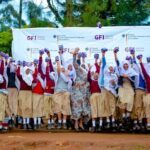
Today, GFI delivers scholarships, digital literacy classes, entrepreneurship workshops, and reproductive health sessions. Through its Girls Network Tanzania, the organisation connects young women with mentors and leadership opportunities, helping them take charge of their futures.
Bridging the digital divide
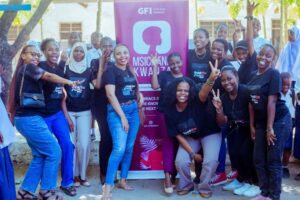
Access to technology remains a significant barrier, particularly for girls in rural areas. To bridge that gap, GFI developed Msichana Kwanza (“Girl First”) — an offline learning and mentorship platform that delivers educational resources to remote communities.
“We can’t talk about empowerment without access,” Bahati says. “Msichana Kwanza ensures no girl is left behind, even without the internet.”
Balancing grassroots needs with national policy
GFI’s success lies in its ability to blend community engagement with institutional partnerships.
“We start by listening,” Bahati says. “We co-create programmes with local leaders and formalise partnerships through memorandums of understanding with schools, health providers, and local authorities.”
This approach ensures the organisation’s work aligns with Tanzania’s national strategies for education, gender equality, and youth empowerment.
Financial independence for women
Like many non profits, GFI faces the challenge of sustaining its work financially. To tackle this, Bahati launched Taa ya Maisha (“Light of Life”), a one-year vocational and entrepreneurship programme for marginalised women.
“It’s designed to reduce donor dependency,” she says. “We equip women with business and financial literacy skills so they can become self-sufficient and support others.”
The resilience behind the mission
As a young woman leader, Bahati has faced her share of scepticism.
“I’ve been underestimated,” she admits. “Some male leaders question my capacity because of my age. But I draw strength from my mother’s resilience and from the girls we serve. Every challenge only fuels my determination.”
Empowering Africa’s next generation
For Bahati, the future of Africa lies in its girls.
“When you invest in girls, you invest in entire communities,” she says. “GFI’s goal is to build confidence, leadership, and opportunity so girls can drive Africa’s growth. Empowering girls isn’t charity — it’s strategy.”
From a lockdown idea to a national movement, Dorcas Bahati Mgogwe’s Girls First Initiative shows how one determined voice can inspire a generation — and redefine what empowerment looks like in Africa.






Africa
If Ebola Is Too Dangerous for America, It Is Too Dangerous for Kenya
Africa
AfCFTA Aims to Unite Africa’s Fragmented Markets Into a Single Trading Bloc
Africa
Republic of Congo’s Denis Sassou Nguesso, 83, Secures Fifth Term in Power
The Republic of Congo’s president, Denis Sassou Nguesso, was sworn in this week after securing a fifth consecutive term, extending a rule that now spans nearly 42 years. Provisional results announced on Tuesday by the officials put his share of the vote at 94.82% on Sunday’s poll — a margin that, while striking, had been widely anticipated.
The official turnout figure, 84.65%, raised immediate questions. State television reported high participation, yet scenes from polling stations in the capital, Brazzaville, suggested a more subdued reality, with many centres registering thin crowds or none at all. The discrepancy has reinforced longstanding doubts about the transparency of the electoral process.
![President Denis Sassou Nguesso casts his vote at a polling station in Brazzaville during the Republic of Congo’s presidential election, 15 March 2026. [Congo Presidency/Handout via Reuters]](https://aukmedia.co.uk/wp-content/uploads/2026/04/DS-300x169.png)
President Denis Sassou Nguesso casts his vote at a polling station in Brazzaville during the Republic of Congo’s presidential election, 15 March 2026. [Congo Presidency/Handout via Reuters]
The election unfolded against the backdrop of an opposition boycott. Two key parties withdrew, alleging unfair conditions, while prominent figures such as General Jean-Marie Michel Mokoko and André Okombi Salissa — both imprisoned for nearly a decade — were absent from the contest. Their exclusion further narrowed an already limited field.
Restrictions in the run-up to the vote added to concerns. Internet access was cut, as has become routine during presidential elections, and movement across Brazzaville was constrained. Human rights groups reported arrests of activists, the suspension of opposition parties and tight monitoring of public gatherings, contributing to what critics describe as a climate of repression.
These dynamics reflect deeper structural patterns. Since returning to power after the 1997 civil war, Sassou Nguesso has consolidated control over state institutions. A 2015 constitutional referendum removed age and term limits, enabling him to extend his tenure and further entrench incumbency.
Yet the political continuity contrasts sharply with the country’s economic fragility. Despite significant oil and mineral wealth, the Republic of Congo remains heavily indebted. According to the World Bank, public debt stands at around 94.5% of gross domestic product, underscoring the persistent gap between resource revenues and broader development outcomes.
The scale of Sassou Nguesso’s victory, combined with the conditions under which it was secured, is likely to deepen scrutiny of both the electoral framework and the prospects for political pluralism. As the new term begins, questions around governance, economic management and eventual succession remain unresolved, even as the contours of power appear largely unchanged.


If Ebola Is Too Dangerous for America, It Is Too Dangerous for Kenya

AfCFTA Aims to Unite Africa’s Fragmented Markets Into a Single Trading Bloc
![President Denis Sassou Nguesso casts his vote at a polling station in Brazzaville during the Republic of Congo’s presidential election, 15 March 2026. [Congo Presidency/Handout via Reuters]](https://aukmedia.co.uk/wp-content/uploads/2026/04/DS-80x80.png)
Republic of Congo’s Denis Sassou Nguesso, 83, Secures Fifth Term in Power

Zia Yusuf from Reform UK Proposes Blocking Visas for Citizens of Countries Pursuing Slavery Reparations

ECOWAS at 50: President Obasanjo Warns of Declining Trust and Growing Divisions at Oxford Forum


