Connect with us

Africa

South Africa Snubbed at G7 Summit: A Diplomatic Setback
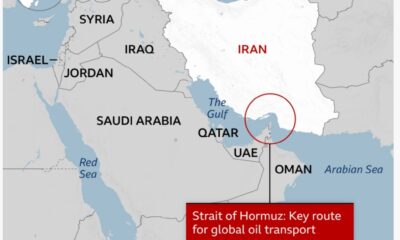
The upcoming G7 summit in Evian-les-Bains (June 15–17) will include leaders from India, South Korea, Brazil, and Kenya—but conspicuously absent is South Africa. Officially, the French presidency framed the summit as an effort to engage a broader group of democratic, market-based economies to tackle global challenges, including a looming financial crisis. Yet South Africa’s exclusion reveals a far more contentious political calculus.

China will not attend and continues to question the G7’s legitimacy, labeling it a “club of rich countries.” Meanwhile, South Africa’s disinvitation exposes the uneven power dynamics shaping global diplomacy. Initially invited by French President Emmanuel Macron during the G20 summit in South Africa in November 2025, President Cyril Ramaphosa was later disinvited under direct pressure from the United States. Vincent Magwenya, Ramaphosa’s spokesperson, confirmed that Washington threatened to boycott the G7 if South Africa attended.

South Africa’s relationship with Trump’s administration has been tense for years, fueled by disputes over the alleged exodus of White South Africans to the US and Pretoria’s decision to take Israel to the International Court of Justice over its actions in Gaza. The tensions are further compounded by South Africa’s role as one of the strongest members of BRICS, a bloc championed by Russia, often positioning itself against Western-led initiatives.

Emmanuel Macron tried to uphold France’s autonomy in the face of US pressure, though analysts suggest Trump’s administration played a key role in South Africa’s exclusion. France and South Africa maintain strong diplomatic ties: in 2021, trade between the two countries rose by over 20% to €2.6 billion, with South Africa as France’s largest partner in Sub-Saharan Africa, its biggest customer, and second-largest supplier. Nearly 370 French companies operate in South Africa, making France the 11th largest foreign investor, with FDI stock exceeding €3 billion in 2020.

Replacing South Africa with Kenya, whose president is widely seen as aligned with US and Western interests, underscores the political nature of G7 invitations. Rather than serving as a neutral platform for global economic dialogue, the summit increasingly appears a stage for enforcing geopolitical allegiances, leaving South Africa—and broader African representation—on the sidelines.

Africa

Can Winnie Odinga Win ODM’s Hearts?

Winnie Odinga’s political positioning reflects a deliberate attempt to reconcile two competing forces within the Orange Democratic Movement (ODM): the entrenched authority of legacy leadership embodied by Raila Odinga, and mounting pressure from a politically assertive, increasingly disillusioned youth constituency.

Her role in the East African Legislative Assembly provides regional stature, but her domestic challenge is institutional. She is not merely amplifying youth rhetoric; she is attempting to re-engineer ODM’s functional identity—from a historically anchored opposition vehicle into a platform capable of absorbing generational demands, particularly those of Gen Z voters focused on unemployment, governance deficits, and political inclusion.

This intervention comes at a structurally sensitive moment. The Odinga family’s consolidation of control at the March 26 Special Delegates Convention signals organisational continuity, yet also reveals internal fragilities. ODM’s cohesion is increasingly contingent, with latent factionalism posing a credible threat to its electoral durability. Within this framework, Winnie Odinga’s outreach operates as both renewal strategy and pre-emptive stabilisation.

The ambiguity of ODM’s relationship with President William Ruto further complicates this recalibration. For younger constituencies, perceived proximity to executive power dilutes ODM’s oppositional credibility and creates ideological inconsistency. A party positioning itself as a counterweight to government while engaging in tacit alignment risks strategic incoherence. Winnie Odinga’s framing implicitly recognises this contradiction, though it remains politically sensitive to address directly.

Her intervention at the Linda Ground Special Delegates Convention sharpened this positioning. By elevating grassroots grievances—particularly from unemployed graduates—she reframed youth disengagement as a systemic failure of party architecture rather than generational apathy. Her critique of performative participation—limited to rallies and mobilisation—targets a structural feature of Kenyan party politics: the extraction of youth energy without corresponding inclusion in decision-making.

Her call for a “new ODM” was explicit in its direction. She urged the party to revert to its foundational ethos as a platform for the marginalised, while embedding youth participation within policy formulation and internal negotiations. This framing moves beyond symbolic inclusion toward institutional redesign—an agenda that, if implemented, would materially alter intra-party power distribution.

However, alignment with youth sentiment does not automatically convert into durable political capital. Three structural constraints remain.

First, dynastic optics. Operating within the Odinga political lineage confers visibility but also reinforces perceptions of elite continuity. Among Gen Z voters sceptical of inherited power, this creates a credibility threshold that reformist messaging alone may not overcome.

Second, institutional inertia within ODM. Senior figures, including Oburu Oginga, have signalled openness, particularly following his elevation within party leadership. Yet absent formal mechanisms—such as youth representation quotas or participatory policy frameworks—these assurances risk remaining declarative rather than operational.

Third, unresolved strategic positioning vis-à-vis the Ruto administration. Without a clearly defined stance, ODM’s internal messaging—especially to politically conscious youth—remains fragmented. A constituency oriented toward accountability is unlikely to respond to ambiguity on whether the party is oppositional or accommodative.

Analytically, Winnie Odinga’s political project is viable but conditional. Its success hinges on her capacity to translate discursive advocacy into institutional reform, while constructing a leadership identity that is distinct from, rather than derivative of, the broader Odinga legacy.

Her intervention has nonetheless catalysed a substantive debate about ODM’s future trajectory and the role of youth within Kenya’s political system. The outcome of this internal contest—between continuity and adaptation—will determine whether ODM can remain electorally relevant in an environment increasingly shaped by generational politics.

Continue Reading

Africa

Burundi- Latest- President Évariste Ndayishimiye Expresses Gratitude for Outpouring of Support

A series of powerful explosions, followed by sustained secondary detonations, struck the “Base” camp munitions depot in Musaga, south of the capital Bujumbura, on Tuesday evening.

According to Brigadier General Gaspard Baratuza, spokesperson for the Force de Défense Nationale du Burundi, the incident was caused by an electrical fault within the facility.

The initial explosion occurred at approximately 6:00 p.m., with intermittent detonations continuing for more than an hour. By 7:39 p.m., further blasts were still being reported, suggesting ongoing explosions of stored munitions.

Preliminary accounts indicate that several nearby homes were destroyed and at least one fatality has been confirmed. No comprehensive official toll of casualties or material damage has yet been released.

In a statement issued shortly after the incident, President Évariste Ndayishimiye, who was in the country at the time, expressed appreciation for the messages of support received:

On behalf of the Burundian people, I wish to express my gratitude to all those who, near or far, have shown us their solidarity following the fire that occurred at one of the logistical warehouses of the Musaga military base. I also wish to reassure you that the situation is under control.”

Continue Reading

Africa

Tuanzebe, Former England Under-21, and Burnley FC Defender Fires DR Congo Back to the World Cup After 52-Year Absence

The Democratic Republic of Congo has secured a long-awaited return to the FIFA World Cup, defeating Jamaica’s “Reggae Boyz” 1–0 in a tense play-off final decided in extra time by Axel Tuanzebe.

Tuanzebe, 29, born in eastern DR Congo and now playing for Burnley FC, struck in the 100th minute, reacting quickest at the back post after a poorly cleared set-piece to tap home the decisive goal. His intervention ends a 52-year absence from the global tournament and confirms Les Leopards of the DR Congo’s return to football’s biggest stage.

The country last appeared at the World Cup in 1974 under the name Zaire, where it exited at the group stage following heavy defeats to Brazil, Scotland and Yugoslavia. This latest qualification represents both redemption and renewal.

The match was finely balanced, with DR Congo creating the clearer chances. Cédric Bakambu, of Real Betis, saw an early effort ruled out for offside and later tested Andre Blake, whose outstanding performance kept Jamaica level and forced extra time.

Try as they might, Jamaica could not find a way back. The second half of extra time was disrupted by an injury to referee Facundo Tello, who left the pitch in tears with an apparent calf problem. Despite late pressure, Jamaica were unable to respond.

DR Congo now advances to a challenging group featuring Portugal, Uzbekistan and Colombia, with their opening match scheduled against Portugal in Houston.

Ranked 48th in the world and 7th in Africa, the Central African nation—home to more than 120 million people—continues to produce top-level football talent. Among them are Claude Makélélé, who starred for Chelsea FC and Real Madrid; Romelu Lukaku, formerly of AC Milan; Trésor LuaLua of Newcastle United; and current internationals Chancel Mbemba, now at LOSC Lille, and Yoane Wissa  at Newcastle.

Axel Tuanzebe, Burnley FC Defender. Picture @Leopards

Axel Tuanzebe, Burnley FC Defender. Picture @Leopards

Speaking after the match, Tuanzebe acknowledged the pressure of the occasion. “We made it a very difficult game for ourselves,” he said. “It was so frustrating, there were some nerves, the pressure got to us a bit. But once we found our rhythm, we were the better team.

To get the winning goal for the country is something you dream about as a young boy. It has happened for me and I am very happy.”

For DR Congo, the victory caps an 18-month qualification campaign spanning 13 matches. Their return to the World Cup will begin against Portugal, marking the start of a new chapter for a nation re-emerging on football’s global stage.

For Jamaica, the defeat extends their absence from the tournament to nearly three decades, compounded by uncertainty following the departure of former manager Steve McClaren earlier in the campaign.

Continue Reading