
Africa
Africa’s Financial Leaders Gather in Abidjan to Launch Bold New Capital Architecture
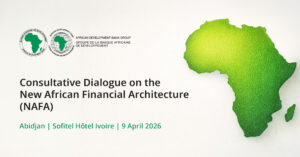
The African Development Bank Group will convene a high-level consultative dialogue in Abidjan this week, bringing together the continent’s financial leadership to advance a proposed New African Financial Architecture (NAFA). The meeting, scheduled for 9 April 2026 at the Sofitel Abidjan Hôtel Ivoire, is framed as a pivot from policy discussion to implementation.
Held under the patronage of Alassane Ouattara, the gathering will be led by the Bank’s president, Sidi Ould Tah. It is expected to draw central bank governors, sovereign wealth fund executives,
African Development Group Bank
The scale of the challenge is well rehearsed. The continent faces an estimated annual development financing gap exceeding $400bn. Yet this shortfall sits alongside roughly $4tn in long-term domestic savings, underscoring structural inefficiencies rather than an absence of capital. Fragmented institutions, weak risk allocation mechanisms and limited coordination between public and private balance sheets have constrained the effective deployment of these resources.
NAFA, the framework championed by the African Development Bank, seeks to address these shortcomings through a systemic reorganisation of capital mobilisation and risk distribution across the financial ecosystem. Anchored in Dr Ould Tah’s “Four Cardinal Points” strategy, the initiative aims to enhance leverage, deepen capital markets and improve the interface between domestic savings and investment pipelines.
The Abidjan dialogue marks the first attempt to convene the continent’s financial actors under a single, coordinated architecture. Organisers present it as a decisive shift from diagnostic phase to execution, following a series of consultations conducted since late 2025.
Discussions will be structured around nine thematic working groups, or “Labs”, organised across three pillars: system architecture, capital mobilisation and capital deployment. Each is expected to produce actionable outputs, ranging from financial instruments and investment platforms to regulatory and institutional frameworks.
The meeting is set to culminate in the adoption of an “Abidjan Consensus”, intended to formalise commitments and provide a roadmap for implementation. Whether this effort can translate into measurable shifts in capital flows will depend on the extent to which participating institutions align incentives and move beyond fragmented approaches that have historically limited scale.

![President Denis Sassou Nguesso casts his vote at a polling station in Brazzaville during the Republic of Congo’s presidential election, 15 March 2026. [Congo Presidency/Handout via Reuters]](https://aukmedia.co.uk/wp-content/uploads/2026/04/DS-400x240.png)




Africa
If Ebola Is Too Dangerous for America, It Is Too Dangerous for Kenya
Africa
AfCFTA Aims to Unite Africa’s Fragmented Markets Into a Single Trading Bloc
Africa
Republic of Congo’s Denis Sassou Nguesso, 83, Secures Fifth Term in Power
The Republic of Congo’s president, Denis Sassou Nguesso, was sworn in this week after securing a fifth consecutive term, extending a rule that now spans nearly 42 years. Provisional results announced on Tuesday by the officials put his share of the vote at 94.82% on Sunday’s poll — a margin that, while striking, had been widely anticipated.
The official turnout figure, 84.65%, raised immediate questions. State television reported high participation, yet scenes from polling stations in the capital, Brazzaville, suggested a more subdued reality, with many centres registering thin crowds or none at all. The discrepancy has reinforced longstanding doubts about the transparency of the electoral process.
![President Denis Sassou Nguesso casts his vote at a polling station in Brazzaville during the Republic of Congo’s presidential election, 15 March 2026. [Congo Presidency/Handout via Reuters]](https://aukmedia.co.uk/wp-content/uploads/2026/04/DS-300x169.png)
President Denis Sassou Nguesso casts his vote at a polling station in Brazzaville during the Republic of Congo’s presidential election, 15 March 2026. [Congo Presidency/Handout via Reuters]
The election unfolded against the backdrop of an opposition boycott. Two key parties withdrew, alleging unfair conditions, while prominent figures such as General Jean-Marie Michel Mokoko and André Okombi Salissa — both imprisoned for nearly a decade — were absent from the contest. Their exclusion further narrowed an already limited field.
Restrictions in the run-up to the vote added to concerns. Internet access was cut, as has become routine during presidential elections, and movement across Brazzaville was constrained. Human rights groups reported arrests of activists, the suspension of opposition parties and tight monitoring of public gatherings, contributing to what critics describe as a climate of repression.
These dynamics reflect deeper structural patterns. Since returning to power after the 1997 civil war, Sassou Nguesso has consolidated control over state institutions. A 2015 constitutional referendum removed age and term limits, enabling him to extend his tenure and further entrench incumbency.
Yet the political continuity contrasts sharply with the country’s economic fragility. Despite significant oil and mineral wealth, the Republic of Congo remains heavily indebted. According to the World Bank, public debt stands at around 94.5% of gross domestic product, underscoring the persistent gap between resource revenues and broader development outcomes.
The scale of Sassou Nguesso’s victory, combined with the conditions under which it was secured, is likely to deepen scrutiny of both the electoral framework and the prospects for political pluralism. As the new term begins, questions around governance, economic management and eventual succession remain unresolved, even as the contours of power appear largely unchanged.


If Ebola Is Too Dangerous for America, It Is Too Dangerous for Kenya

AfCFTA Aims to Unite Africa’s Fragmented Markets Into a Single Trading Bloc
![President Denis Sassou Nguesso casts his vote at a polling station in Brazzaville during the Republic of Congo’s presidential election, 15 March 2026. [Congo Presidency/Handout via Reuters]](https://aukmedia.co.uk/wp-content/uploads/2026/04/DS-80x80.png)
Republic of Congo’s Denis Sassou Nguesso, 83, Secures Fifth Term in Power

Zia Yusuf from Reform UK Proposes Blocking Visas for Citizens of Countries Pursuing Slavery Reparations

ECOWAS at 50: President Obasanjo Warns of Declining Trust and Growing Divisions at Oxford Forum


