Connect with us

Africa

African Union backs Macky Sall as potential successor to António Guterres at UN
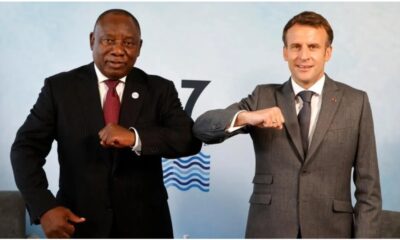
The African Union is backing Macky Sall as a potential successor to António Guterres, signalling a renewed push for African leadership at the United Nations.

Diplomats say the endorsement reflects a growing determination among African states to unite behind a single candidate, seeking to avoid past divisions that have weakened the continent’s influence in global appointments. The effort also aligns with long-standing calls for regional balance in the leadership of international institutions.

Macky Sall is regarded by supporters as an experienced statesman with strong multilateral credentials. During his tenure, he chaired the African Union and played an active role in global diplomacy, positioning himself as a bridge between Africa and major powers.

The process to appoint the next UN secretary-general remains highly political, with the final decision resting with the UN Security Council, where veto powers can prove decisive. Even so, analysts suggest that a unified African candidacy could carry considerable weight.

If elected, Sall would become the third African to lead the United Nations, following Boutros Boutros-Ghali, who served from 1992 to 1996 as the first African and Arab to hold the post, and Kofi Annan, who led the organisation from 1997 to 2006 and was awarded the Nobel Peace Prize in 2001.

After leaving the UN, Boutros-Ghali went on to head the Organisation internationale de la Francophonie, promoting cooperation among French-speaking nations. He died in 2016, while Annan, widely respected for his diplomatic leadership, received the Nobel Peace Prize in 2001, and died in 2018.

Advocates argue that the time is ripe for Africa to once again assume the UN’s top role, pointing to the continent’s growing global significance and its central place in the organisation’s peacekeeping and development agenda.

Africa

French-Congolese Music Star Gims Detained in Paris Over Alleged International Money Laundering

Gims, the 39-year-old singer and rapper whose real name is Gandhi Alimasi Djuna, was stopped by police upon arrival at Charles de Gaulle Airport in Paris and placed in custody by judicial customs officers, according to France24.

The questioning is being conducted under a judicial commission supervised by France’s National Prosecutor’s Office for Organized Crime, a unit established earlier this year to tackle complex criminal networks. Investigators say the case involves a suspected international operation that allegedly used multiple companies across several countries to evade taxes, issue false invoices, and conceal the origin of illegally obtained funds.

Authorities have already implicated several individuals, reportedly former drug traffickers who later turned to financial crime. The investigation is also examining a luxury real estate development promoted by Gims in Marrakech, where he resides part-time. The project, known as “Sunset Village Private Residences,” includes plans for 118 high-end villas featuring sports facilities, a spa, sauna, and hammam, all centered around a large lagoon. Launched in 2025 with extensive publicity, the development was billed as a key expansion of the artist’s business interests beyond music.

The case continues to unfold, and legal experts caution that being taken into custody and questioned does not constitute a conviction. Authorities are expected to release further details as the investigation progresses.


Continue Reading

Africa

Oxford to Appoint First Black Lord Mayor in Historic First

The Oxford City Council has announced that Councillor Chewe Munkonge is set to become the next Lord Mayor of Oxford, marking a historic milestone as the city prepares to appoint its first Black holder of the largely ceremonial office.

The nomination, confirmed at a council meeting on 23 March, was made by council leader Susan Brown, who also named Louise Upton as deputy Lord Mayor and Linda Smith as Sheriff for the 2026/27 civic year. Both Munkonge and Upton remain subject to re-election in May before formally taking up their posts.

If confirmed, Munkonge will assume a role steeped in centuries of tradition, representing the city at more than 300 engagements annually, ranging from royal visits and the Remembrance Sunday service to community initiatives and charitable events. He has chosen Sobell House and St Theresa as his official charities for the year.

The transition is due to take place during Oxford’s traditional “mayor making” ceremony at the Town Hall in May, when Upton, the outgoing Lord Mayor, will hand over the chains of office. The occasion will be marked by the ringing of bells at Carfax Tower, continuing a long-established civic ritual.

Born in Zambia, Munkonge moved to the UK in 2003 and settled in Oxford in 2008. He holds an MBA from Oxford Brookes University and works as a central administration officer for a local charity. First elected in 2014, he represents Quarry and Risinghurst ward and currently serves as cabinet member for a healthy, fairer Oxford, as well as the council’s small business champion.

His expected appointment reflects both the growing diversity of modern Oxford and the enduring ceremonial significance of the role, which dates back to the early 13th century. The city’s first recorded mayor, Laurence Kepeharme, served between 1205 and 1209, while the title of Lord Mayor was granted in 1962 by Elizabeth II.

According to Oxford City Council, the position remains a symbolic bridge between Oxford’s historic institutions and its contemporary communities—an office Munkonge is now poised to redefine.

Renowned globally as the home of the University of Oxford, one of the world’s oldest universities, Oxford combines deep academic heritage with a diverse and evolving civic identity—context that gives added resonance to this landmark appointment.

Continue Reading

Africa

UN Backs Ghana Resolution Declaring Transatlantic Slave Trade “Gravest Crime” Despite Western Opposition

The United Nations General Assembly has adopted a Ghana-backed resolution declaring the transatlantic slave trade the “gravest crime against humanity”, in a vote that exposed sharp divisions between the global south and several western powers.

The measure, introduced by Ghana, secured the backing of 123 countries on Wednesday. Three states, including the United States and Israel, voted against it, while 52 others — among them the European Union members and the United Kingdom — abstained.

The resolution formally recognises the transatlantic slave trade and slavery as crimes of exceptional gravity, underscoring their enduring impact on global inequality, racial injustice and development disparities. It calls for renewed international dialogue on reparations, including the possibility of formal apologies and compensation, reflecting mounting pressure from African and Caribbean states for historical accountability.

While General Assembly resolutions are not legally binding, the vote is widely seen as the strongest collective stance yet taken by the UN on the legacy of slavery. Diplomats say it reinforces a growing push to place reparatory justice more firmly on the international agenda, even as western governments remain cautious about the legal and financial implications.

Speaking after the vote, Ghana’s foreign affairs minister, Samuel Okudzeto Ablakwa, described the outcome as “a historic step forward”, arguing that the international community could no longer ignore the lasting consequences of centuries of exploitation.

Opponents, however, warned that the language of the resolution risks deepening geopolitical divides, particularly over questions of liability and redress. Despite those concerns, supporters insist the measure represents a moral reckoning long overdue — and a signal that calls for justice are gaining traction at the highest levels of global governance.


Continue Reading