
Black History Month
A conversation with Jacqui Burnett: An inspirational Leader
A Conversation with Jacqui Burnett: An Inspirational Leader
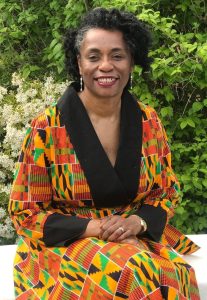 As we celebrate the achievements of the inspirational Black British individuals and culture that has shaped the UK, AUK Radio sat down with one of Luton’s influential leaders, Councillor Jacqui Burnett.
The Hackney-born mother of four gave us insight into the experiences that have shaped and made her who she is today. Serving as a councillor for over 10 years made her one of the longest-serving black counselors in Luton.
Although being a Lutonian for over 30 years, Jacqui was born in Stepney Hospital, Tower Hamlets. “I’m a cockney by birth and I’m not ashamed of it!”
When asked about the difference between Luton and London, Jacqui had some thoughts about life in Luton and London.
“London has 32 boroughs and since the Brixton riots in the 80s and gentrification, there’s no spirit that connects people in the way we’ve got it in Luton.”
Speaking to Cllr Jacqui, you can get a strong sense of the determination, especially as she talks about her parenting method in turn helped her children go to the right schools. “I’ve been a very ambitious parent, and I have no problem, because the perception of many is that African-Caribbean’s are not ambitious enough for their children, and that’s some of the stereotypes that are wrong.”
Having worked in the finance industry and supporting the arts, this influenced in her decision-making as a councillor.
“It’s about decision making at a strategic level, and what I have made sure that I’ve done is that I’ve got a very good relationship with the chief executive for the shared learning trust, who is responsible for Chalk Hills Academy. So, for me, that’s about being proactive. As a school governor, I’ve understood the importance of education, but not just academics. Not everybody is going to have the same gifts in life, there are some people that are going to be very gifted in academics, and some who are very musical or practical. It doesn’t mean that the child or the young person who has the gift to use their hands more is any less important than those who are academic, or that they will succeed less in life.”
Jacqui has been a huge supporter of the arts around Luton, having worked in partnership with Tomorrow Warriors, Luton Music Service and ACCDF to create The Phoenix Orchestra, a youth jazz orchestra with diverse and talented members of the Luton community.
“What I’ve learned as a researcher and being a school governor and a parent, is that it’s really important for the family to find the genius in the child.”
Jacqui is also a dedicated member of the African-Caribbean Community Development Forum (ACCDF) which successfully closed the educational gap of children with black heritage in Luton between 2011-12. Around that completed statutory schooling and achieved an A-C GCSE.
“Closing the attainment gap for African Heritage was a collective work. Working with the local authorities and schools.”
When speaking about the future of African-Caribbean people, Jacqui believes that it’s important that Black British people connect nationally and globally with the diaspora. 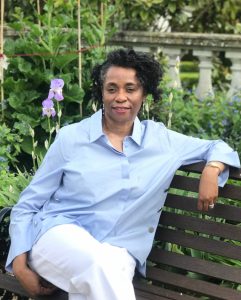
“ACCDF is the founding member of the Windrush National Organisation, We launched during the pandemic, so that’s the connection globally that we’ve made as the result of the Windrush Scandal. So, we’ve got people working in Bristol, Manchester, Coventry, Leeds.”
Doing a successful run as Councillor, Jacqui was asked if there have been some changes that she has seen and made through being a councillor for Luton that weren’t possible when she first moved here over 30 years ago.
Jacqui talked about the huge accomplishment of the Inspire Centre in Luton.
“Since I’ve been a councillor and involved in Inspire being done, I’m happy about that, there being an up-to-date sports facility for Luton, compared to other areas in the UK, in the pandemic where swimming facilities, leisure facilities have not opened, we have got Inspire.”
“This is about a collective having a vision and seeing it through, because when Inspire finished in 2012, austerity came, and if we had left it, we would not have built it.”
When asked what she would say to her younger self, Jacqui had a few words.
“Get comfortable in your skin and know myself, and I wish I had read The Richest Man in Babylon.”. The book, which is written by George S. Clason gives financial tips and advice to improve in life.
Using three words, Jacqui describes herself as being someone with integrity, passion and believes in herself. Being able to achieve many goals and impact so many, Jacqui had some words of advice to give to younger Lutonians.
“Life is a gift, and tomorrow isn’t guaranteed to us. Be purposeful in life and use the talent you have and let it grow because you don’t know where it’s going to take you.”
“So, for me, I have not achieved anything by my own will, I may have the ambition, I may have the drive, I might have the vision, but the things I have achieved for the community I did as a result of working with others.







Africa
Why was Pan-African Activist Kemi Seba Arrested in South Africa?
Africa
South Africa: Julius Malema, Leader of EFF, Sentenced to Five Years in Prison Over Firearm Offence.
A South African court has handed a five-year prison sentence to Julius Malema, in a ruling that could ultimately disqualify one of the country’s most prominent political figures from serving in parliament.
Malema, leader of the Economic Freedom Fighters, remained in court in KuGompo City on Thursday as magistrates weighed whether to admit an appeal against the sentence. It was not immediately clear whether that process would delay any transfer to prison.
The 45-year-old was convicted last year on multiple charges stemming from a 2018 rally in the Eastern Cape, where he fired a rifle into the air inside a stadium. Delivering judgment, magistrate Twanet Olivier warned that impunity for such offences would pose “a serious threat to our democratic state”.
The court imposed five years for unlawful possession of a firearm and a further two years for unlawful possession of ammunition, alongside fines for additional offences, including discharging a firearm in a built-up area. The sentences are to run concurrently.
Under South Africa’s constitution, any prison term exceeding 12 months—once all appeals are exhausted—renders an individual ineligible to serve as a lawmaker. For Malema and his party, the implications are significant.
The EFF, parliament’s fourth-largest party, has built a strong following among younger South Africans disillusioned by the enduring inequalities that have persisted since the end of apartheid in 1994. Its platform—centred on the nationalisation of mines and land redistribution—has made Malema both a galvanising and polarising figure in the country’s political landscape.
Prosecutors argued that failing to impose a custodial sentence would set a dangerous precedent, urging the court to consider the maximum penalty of 15 years. Malema’s legal team, by contrast, maintained that the firearm was discharged as part of a celebratory gesture, with no intent to cause harm, and called for a more lenient sanction, such as a fine.
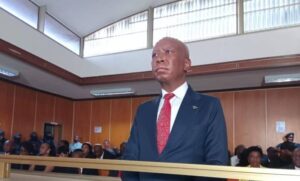
Julius Malema, leader of the Economic Freedom Fighters, during his appearance at the East London Magistrate’s Court on Wednesday. (Source: witness.co.za)
Africa
Benin: Finance Minister Romuald Wadagni Wins Presidency with Landslide Victory
Benin’s finance minister, Romuald Wadagni, has won the country’s presidential election with a commanding 94% of the vote, according to provisional results released by the electoral commission (CENA), after more than 90% of ballots were counted.
The result confirms a widely anticipated victory for Wadagni, 49, who stood as the candidate of the ruling alliance between the Progressive Union Renewal (UPR) and the Republican Bloc (BR). His campaign was strongly backed by outgoing president Patrice Talon, who is constitutionally barred from seeking a third term after completing two five-year mandates.
Wadagni’s ascent caps a decade in which he served as finance minister, overseeing sustained economic growth averaging above 6% annually. He has pledged continuity of that trajectory in a country often cited as one of West Africa’s more stable democracies, despite a failed coup attempt in December 2025.
His only challenger, Paul Hounkpe of the FCBE party, conceded defeat while counting was still under way. In a statement, he extended “republican congratulations” and called for respect for democratic norms.
CENA chair Sacca Lafia said the vote had been conducted peacefully. Civil society observers reported around one hundred incident alerts, including early openings of polling stations and cases where ballot boxes appeared already full at opening time.
The Economic Community of West African States (ECOWAS) observer mission described a “peaceful atmosphere” and “smooth running” of the vote.
About 7.9 million citizens were registered to vote, with turnout recorded at 58.75% nationally. Participation was significantly lower in the capital, Porto-Novo, where it fell to between 20% and 40% in some polling stations.
However, the election took place under conditions criticised by analysts, who argue that political space has narrowed during Talon’s presidency. The main opposition party, Les Démocrates, was excluded from the ballot after failing to secure parliamentary endorsements required under constitutional changes introduced last year.
Those reforms, which tie presidential eligibility to legislative backing, effectively blocked opposition leader Renaud Agbodjo from qualifying for the race, as his party holds no seats in the National Assembly.

Romuald Wadagni campaigning in Cotonou, Benin, last month. He has been declared the country’s new president according to provisional results. Credit: Charles Placide Tossou/Reuters (via The New York Times)


If Ebola Is Too Dangerous for America, It Is Too Dangerous for Kenya

AfCFTA Aims to Unite Africa’s Fragmented Markets Into a Single Trading Bloc
![President Denis Sassou Nguesso casts his vote at a polling station in Brazzaville during the Republic of Congo’s presidential election, 15 March 2026. [Congo Presidency/Handout via Reuters]](https://aukmedia.co.uk/wp-content/uploads/2026/04/DS-80x80.png)
Republic of Congo’s Denis Sassou Nguesso, 83, Secures Fifth Term in Power

Zia Yusuf from Reform UK Proposes Blocking Visas for Citizens of Countries Pursuing Slavery Reparations

ECOWAS at 50: President Obasanjo Warns of Declining Trust and Growing Divisions at Oxford Forum


