Connect with us

Uncategorized

Why Macky Sall’s Candidacy Raised Questions Over African Union Criteria

The prospective candidacy of Macky Sall for a senior international role has prompted scrutiny over whether it fully aligns with the African Union’s established nomination principles, particularly those relating to transparency, regional balance and procedural legitimacy.

At the core of the debate is the African Union’s expectation that endorsements for high-level international positions should emerge from a consultative process among member states, often reflecting regional consensus. Critics argue that Sall’s bid appeared to lack clear, formal backing through such a structured AU mechanism, raising concerns about whether the appropriate diplomatic channels were followed or sufficiently demonstrated.

A further complicating factor is the internal dynamic within the African Union itself. Under the current rotating leadership of Évariste Ndayishimiye, the AU has been described by some observers as divided on strategic endorsements and continental priorities. This fragmentation has made it more difficult to forge unified positions around high-profile candidacies, including Sall’s, thereby weakening the coherence typically required to support a single African candidate on the global stage.

A second point of contention relates to timing and political positioning. While Sall remains an influential figure following his presidency in Senegal, some analysts suggest that his candidacy may not have been anchored in a coordinated continental strategy. Within AU practice, successful bids are often supported by regional blocs—such as ECOWAS, SADC or the East African Community—before being elevated to a broader continental endorsement. The absence of visible, consolidated regional backing may have undermined the perceived legitimacy of his application.

There is also a governance dimension to the criticism. The AU has increasingly emphasised merit-based selection, equitable geographic representation and institutional credibility when endorsing candidates for global roles. Opponents argue that insufficient clarity around the selection process risks weakening these standards, particularly if multiple African candidates emerge without coordination, thereby diluting the continent’s collective influence.
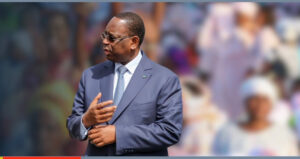


Photo credit: Macky Sall / X (formerly Twitter)

Photo credit: Macky Sall / X (formerly Twitter)

Supporters of Sall, however, point to his international profile, experience in economic diplomacy and engagement with multilateral institutions as strong qualifications. They argue that AU processes are often shaped by political negotiation rather than rigid procedural frameworks, and that candidacies can evolve through consensus-building over time.

In analytical terms, the controversy appears less about formal ineligibility and more about process legitimacy, internal AU cohesion and political alignment. The combination of a fragmented continental position and the absence of a clearly articulated endorsement pathway has contributed to perceptions that the candidacy did not fully meet the African Union’s preferred standards, even if no explicit rule was formally violated.

Continue Reading

Uncategorized

Ex-St Vincent PM Gonsalves Criticises UK Over Abstention in UN Slavery Vote

It is so offensive to humanity that it has always been a crime against humanity”, Ralph Gonsalves, former Prime Minister of Saint Vincent and the Grenadines. He also criticised the United States, Israel and Argentina, who voted against the historic UN Resolution, which was brought forward by Ghana.

Last week, the UN voted to recognise transatlantic slavery as ‌the “gravest crime against humanity.”

Gonsalves has dismissed the UK’s justification for abstaining, calling it “offensive”, according to the St Vincent Times.
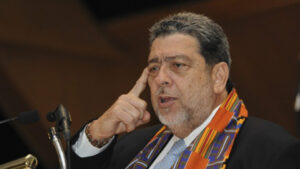
 

Picture @Ralph Gonsalves Facebook

According to the local news outlet, he detailed how the UK’s representative, James Kariuki, acknowledged the “untold harm and misery” of slavery but argued against a “hierarchy of historical atrocities” and claimed there was no legal duty to provide reparations because slavery was not a violation of international law at the time. Gonsalves has dismissed this justification and described it as offensive.

In addition, 52 countries including the United Kingdom and European Union abstained. Ghana’s president John Dramani Mahama, proposed the resolution, which was put forward to 193 countries to cast their vote on 25 March, which is also International Day of Remembrance for Victims of Slavery & Trans Atlantic Slave Trade.

Continue Reading

Africa

Barbadians launch initiative to support Cubans amid ongoing US blockade.

A coalition of Barbadian civil society groups has launched a humanitarian initiative to assist Cuba as the island continues to grapple with acute shortages linked to longstanding US sanctions and fuel constraints.

The Barbados–Cuba Relief Initiative, led by the Hibiscus Sports and Culture Foundation in collaboration with the Barbados-Cuba Friendship Association, aims to mobilise community support and deliver essential supplies to Cuban communities facing mounting economic strain.

Organisers say the campaign will focus on collecting and shipping critical items, including medical supplies, food staples and solar-powered equipment, as Cuba confronts persistent disruptions to energy and supply chains. The initiative is framed as a grassroots response to worsening material conditions on the island, where access to basic goods has become increasingly limited.

The effort is also being positioned within a wider regional context. Campaign leaders have called for stronger Caribbean coordination and indicated that outreach to CARICOM member states is under consideration, with the aim of building a broader humanitarian corridor to Cuba.

Supporters of the initiative point to the longstanding ties between Barbados and Cuba, noting Havana’s history of providing medical brigades and disaster relief assistance across the Caribbean. For many involved, the campaign represents not only an emergency response but a continuation of a reciprocal relationship rooted in regional solidarity.

Continue Reading

Africa

Guinea-Bissau’s Political Storm: What the Military Interference Signals for ECOWAS and the Region

Guinea-Bissau has once again been thrust into political uncertainty after Brigadier General Denis N’Canha announced a military takeover, declaring that the armed forces have assumed full control of the country. President Umaro Sissoco Embaló was placed under house arrest, in a dramatic escalation of tensions already heightened by a fiercely disputed presidential election.

The development is the latest reminder of how fragile governance becomes when democratic institutions are weak, political actors lack trust, and corruption entrenches itself at every level of state functioning.

A Coup Amid a Contested Election

The military intervention comes in the middle of a chaotic electoral environment.

Both Fernando Dias, a relatively unknown 47-year-old candidate, and incumbent Umaro Sissoco Embaló declared victory before the official results were expected.

Dias, backed by influential former Prime Minister Domingos Simões Pereira, told supporters in Bissau that he had won outright and that no second round would be required. Embaló’s campaign issued its own declaration of victory soon after, urging the opposition to accept the results.

In a country where political parties frequently accuse each other of fraud, early self-declarations of victory have become a destabilising norm. But this time, the military stepped in.

What the Military Announced

In its televised address, the military leadership made several sweeping claims and unilateral decisions:

Key Military Claims & Announcements

Accused politicians of collaborating with “drug lords” to destabilize the country
Claimed attempts had been made to manipulate the electoral process
Announced the removal of President Embaló
Declared the suspension of the electoral process
Ordered the closure of all land and maritime borders

These accusations highlight long-standing concerns about Guinea-Bissau’s reputation as a transit hub for drug trafficking, often referred to as Africa’s “narco-state.”
Such narratives are frequently used by political and military actors to justify interventions—but they also reflect real governance vulnerabilities.

Structural Weaknesses Behind the Crisis

Guinea-Bissau has endured repeated coups and attempted coups since independence in 1974. Much of this instability stems from:

Weak state institutions
Deep political fragmentation
An entrenched military elite that views itself as the ultimate arbiter of national authority
Historic mistrust between political parties
Persistent allegations of corruption and drug trafficking

President Embaló’s own record has been contentious. He dissolved the opposition-controlled parliament after the 2019 and 2023 legislative elections and prevented it from sitting since December 2023, following a previous attempted coup. His mandate was also extended by the Supreme Court, adding more controversy.

Regional Implications: Why This Crisis Matters Beyond Guinea-Bissau

The coup in Guinea-Bissau doesn’t exist in isolation—it fits into a broader pattern reshaping West Africa’s political landscape.

Here are the key regional consequences:

1. A New Link in the West African “Coup Belt”

Over the last four years, the Sahel and coastal West Africa have witnessed a wave of military takeovers:

Mali 🇲🇱
Burkina Faso 🇧🇫
Niger 🇳🇪
Guinea 🇬🇳
Attempted coups in Sierra Leone 🇸🇱
Persistent instability in Senegal 🇸🇳 earlier in 2024

Guinea-Bissau now risks becoming the latest link in this “coup belt”—raising alarms for ECOWAS and the African Union.

2. ECOWAS Credibility Is Again on the Line

ECOWAS, already weakened after its failures in Mali, Niger, and Burkina Faso, must now respond to yet another unconstitutional transition.

If the bloc fails to act decisively, its deterrence capacity will be further eroded—potentially encouraging other fragile states in the region to drift toward military interventions.

3. Risks of Regional Criminal Networks Expanding

Guinea-Bissau has long been a trafficking corridor between Latin America, West Africa, and Europe.

A power vacuum or prolonged instability could:

Strengthen transnational criminal networks
Increase drug trafficking
Destabilise neighbouring Senegal 🇸🇳 and Guinea 🇬🇳
Create opportunities for armed groups operating in the Sahel

This possibility concerns regional governments and international partners alike.

4. Threats to Democratic Consolidation in West Africa

The contested elections, competing claims of victory, and subsequent military intervention reinforce a dangerous message:

Elections alone do not guarantee democracy—trust in institutions does.

If political elites routinely bypass democratic processes, and militaries continue stepping in as “arbiters,” the region’s democratic trajectory will continue to slide backward.

5. Potential for Spill over Instability

Guinea-Bissau shares borders with:

Senegal, where tensions simmer in Casamance
Guinea, still recovering from its own military transition

Any prolonged instability could spill over into these neighbouring states—especially through arms flows, displacement, and economic disruption.

A Crisis That Demands Regional Attention

The situation in Guinea-Bissau is more than a domestic power struggle—it is a symptom of deeper structural weaknesses echoing across West Africa.
Weak institutions, contested elections, corruption, military interference, and the influence of transnational criminal networks create a volatile mix that threatens not just Guinea-Bissau’s governance, but the region’s stability.
As ECOWAS and the AU prepare their response, one thing is clear:
The future of democratic stability in West Africa will depend on how effectively these crises are managed—and whether institutions can be strengthened to prevent the next one.

Continue Reading